PCOS Is Now PMOS: 7 Hopeful Signs and Clear Next Steps
By Dr. Shiroko Sokitch, MD
If you have experienced irregular periods, cravings, fatigue, acne, unwanted facial hair, scalp hair changes, or difficulty managing your weight, these symptoms may be connected. Understanding the pattern can bring clearer answers and help you work with your clinician toward care that fits your body, your history, and your goals.
PCOS is now PMOS, and this new name can help us see a much bigger picture. The condition long called polycystic ovary syndrome is now called Polyendocrine Metabolic Ovarian Syndrome. Hormones, metabolism, reproductive function, skin, sleep, and emotional health can all be involved.
In my practice, I listen for the pattern beneath the individual symptoms. I combine Western medicine, functional medicine, and Chinese medicine to understand both your physiology and the way you are experiencing your health. My goal is to help you move forward with clarity, confidence, and hope.
A Clearer Path Forward
Table of Contents
- Quick Answer: What Does the New Name Mean?
- Why the Name Changed from PCOS to PMOS
- Why PMOS Is a Whole Body Condition
- How PMOS Is Diagnosed
- 7 Whole Body Signs That May Be Connected
- PMOS Can Affect Women of Different Body Sizes
- What a Comprehensive Evaluation May Include
- My Integrative Approach to PMOS
- Treatment Is Personal
- Practical Questions to Bring to Your Appointment
- The Bottom Line
- Frequently Asked Questions
- You Deserve to Understand What Your Body Is Communicating
Quick Answer: What Does the New Name Mean?
The transition to the PMOS name reflects an international consensus among professional and patient organizations that the previous terminology was too narrow. PMOS stands for Polyendocrine Metabolic Ovarian Syndrome. “Polyendocrine” points to the involvement of multiple hormone systems. “Metabolic” recognizes concerns such as insulin resistance and longer-term cardiometabolic health. “Ovarian” preserves the importance of ovulation and reproductive function while placing them within the whole-body picture.
Video caption: Watch Dr. Shiroko explain how the PMOS name reflects a whole-body condition and why a whole-person evaluation matters.
Why the Name Changed from PCOS to PMOS
The name changed after years of concern that “polycystic ovary syndrome” centered attention on the ovaries and the word “cysts.” Many people with the condition do not have what most of us imagine as ovarian cysts. On ultrasound, clinicians may see a characteristic pattern of many small follicles, known as polycystic ovarian morphology. Follicles are different from harmful cysts, and an ultrasound finding is only one part of the diagnostic picture.
The official change was announced in May 2026 following an international consensus process involving more than fifty professional and patient organizations. The Endocrine Society explained that the new name is intended to improve understanding, diagnosis, and care. The name is new, but much of the evidence and many clinical guidelines were developed while the condition was still called PCOS. You will therefore see both names in research, medical records, insurance systems, and conversations during this transition.
I appreciate the change because words influence what we look for. The broader PMOS name invites us to consider metabolic health, sleep, emotional well-being, and the effect of symptoms on confidence and daily life alongside ovarian and reproductive health.
Why PMOS Is a Whole Body Condition
PMOS can reach far beyond the menstrual cycle. Hormone signaling may influence ovulation, androgen activity, skin, hair, and fertility. Metabolic signaling may affect the way the body responds to insulin, manages glucose, stores energy, and regulates appetite. Sleep and stress can interact with these systems, while supportive care can strengthen mood, confidence, relationships, and quality of life.
This does not mean every symptom you experience is caused by PMOS. Fatigue, hair loss, irregular bleeding, weight changes, and sleep problems have many possible explanations. Thyroid disorders, pregnancy, high prolactin, hypothalamic causes, certain medications, perimenopause, and other endocrine conditions may need to be considered. That is why a careful medical evaluation matters.
I often describe the body as a conversation. Your brain, ovaries, adrenal glands, pancreas, liver, muscles, fat tissue, immune system, and nervous system send and receive signals all day. When those messages are not coordinated well, you may notice symptoms in several places at once. Seeing the pattern allows us to move beyond asking only, “How do we make a period happen?” and begin asking, “What is happening throughout your body?”
How PMOS Is Diagnosed
The diagnostic approach for adults remains based on established international guidance. After other relevant causes are excluded, diagnosis generally requires at least two of three features: clinical or biochemical hyperandrogenism, ovulatory dysfunction, and polycystic ovarian morphology. In selected adults, serum anti-Müllerian hormone, or AMH, may be used instead of ultrasound to help define polycystic ovarian morphology. It belongs within the complete diagnostic algorithm and is never a stand-alone diagnosis.
If irregular cycles and hyperandrogenism are already present, ultrasound or AMH may not be necessary for diagnosis. Adolescents require a different and more cautious approach because irregular cycles and acne can overlap with normal puberty. A qualified clinician should interpret your age, history, medications, symptoms, examination, and testing together.
Androgens and Laboratory Findings
Androgens include hormones such as testosterone. They are normal and necessary in women, but higher levels or greater tissue sensitivity may contribute to acne, increased facial or body hair, or changes in scalp hair. A clinician may assess these physical signs and order carefully selected blood tests.
Ovulation and Menstrual Cycles
Ovulatory dysfunction may appear as long, unpredictable, or absent menstrual cycles. Some women bleed regularly but do not ovulate consistently, while others have very obvious gaps between periods. Tracking cycle dates and symptoms can give your clinician useful information.
Your cycle history should be discussed alongside metabolism and general health. If you go for extended periods without bleeding, seek medical guidance. Protecting the uterine lining may be part of the plan, depending on your age, goals, health history, and pregnancy intentions.
Ovarian Morphology, Ultrasound, and AMH
Polycystic ovarian morphology describes a particular number and arrangement of small follicles or ovarian volume on ultrasound. These follicles are different from painful or dangerous ovarian cysts, and ultrasound findings are interpreted according to the technology used, the clinician’s training, age, and the complete clinical context.
AMH stands for anti-Müllerian hormone. It is produced by cells surrounding small developing ovarian follicles, so a blood test can offer information about the follicle pattern. For selected adults, AMH may be used as an alternative to ultrasound when evaluating polycystic ovarian morphology. This can provide another practical way to complete the evaluation, but AMH cannot diagnose PMOS by itself, is unnecessary when irregular cycles and hyperandrogenism already establish the required features, and is not recommended for diagnosing adolescents.
Where Insulin Resistance Fits
Insulin helps move glucose from the bloodstream into cells, where it can be used or stored. Insulin resistance means the body must produce more insulin to achieve that effect. It is common in PMOS and may influence androgen production, appetite, energy, and long term metabolic risk.
However, this change does not mean insulin resistance became a fourth required diagnostic criterion. Current guidance recognizes its importance but notes that routine insulin assays have limited clinical usefulness. Depending on your situation, a clinician may assess glucose status, cholesterol, blood pressure, family history, and other cardiometabolic factors. The testing plan should be personalized rather than based on one fashionable laboratory number.
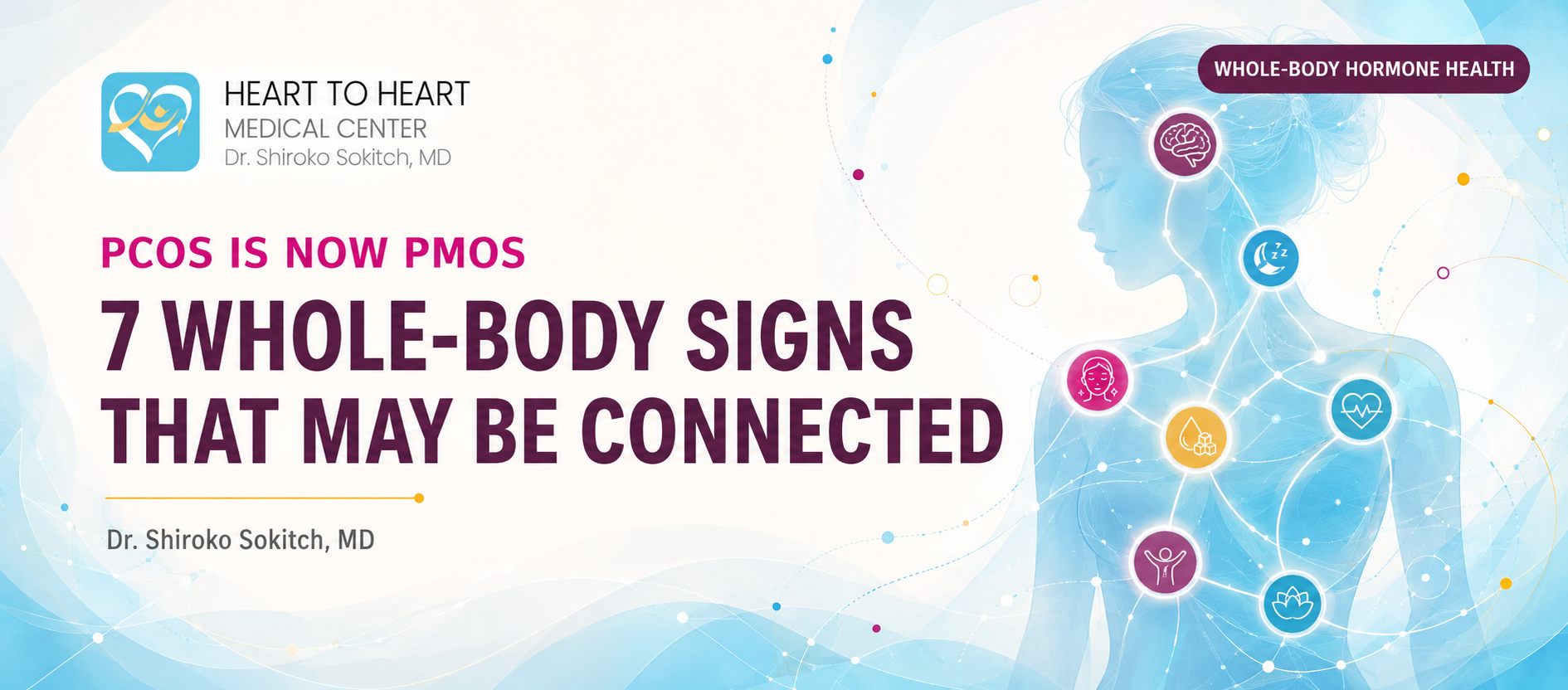
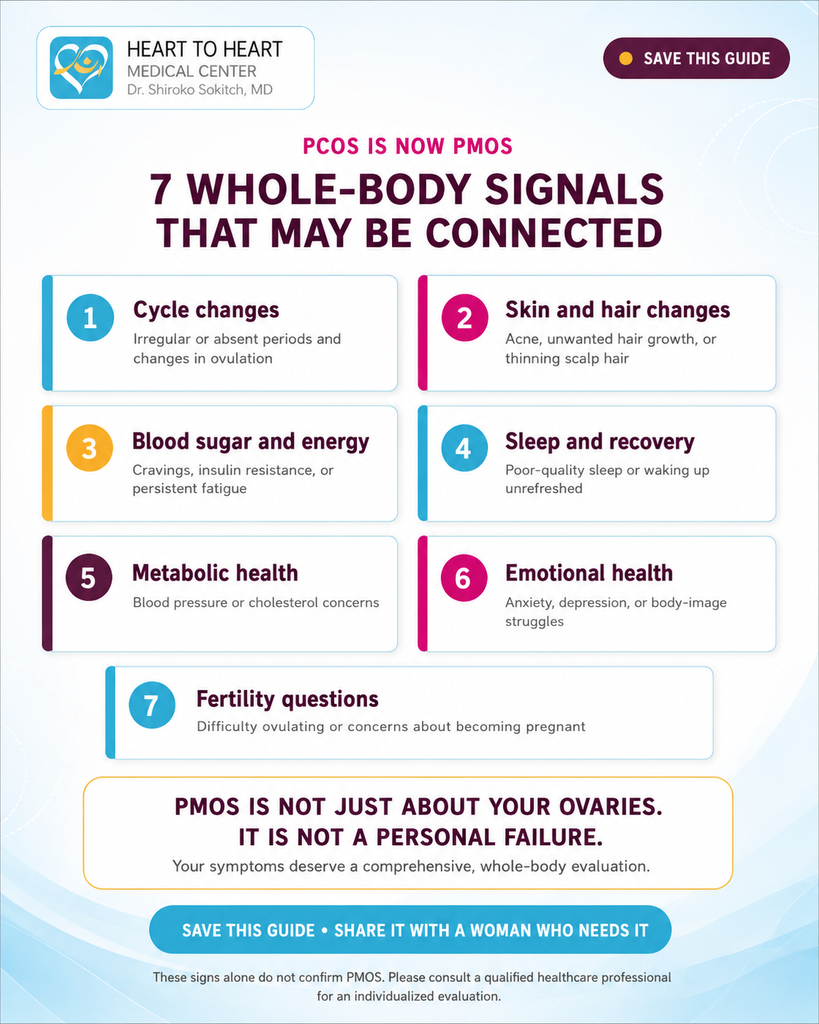
7 Whole Body Signs That May Be Connected
The seven groups below can help you notice a possible pattern. Think of these PMOS signs as useful prompts: keep notes, track what you experience, and bring your observations to a qualified clinician for a complete evaluation.
1. Irregular, Infrequent, or Absent Cycles
Your cycle is one of the clearest windows into ovulation. Periods that come far apart, disappear for months, or arrive unpredictably may reflect ovulatory dysfunction. Some women also experience heavy bleeding after a long gap. Others have spotting that makes it difficult to know what counts as a true period.
Irregular bleeding deserves an individualized assessment because pregnancy, thyroid concerns, changes in exercise or nutrition, stress, perimenopause, medications, and other conditions can alter cycles. Bring a calendar or tracking-app record to your appointment, including the first day of bleeding and how long it lasted.
2. Acne, Facial Hair, or Scalp Hair Changes
Androgen related changes can show up in the skin and hair. You may notice persistent jawline acne, darker or coarser facial or body hair, or thinning on the scalp. These experiences can affect both physical comfort and emotional well-being, and they deserve thoughtful medical attention.
Visible symptoms can offer useful clues about internal hormone signaling. Acne and hair changes can also have other causes, including genetics, dermatologic conditions, nutrient status, thyroid function, medications, and life stage, so evaluation should remain individualized.
3. Blood Sugar Shifts, Cravings, and Uneven Energy
You may recognize intense cravings, feeling shaky or irritable when meals are delayed, sleepiness after eating, or energy that rises and crashes. These sensations are not specific enough to diagnose insulin resistance, but they belong in the conversation.
Metabolic health is a central part of the condition for many people. A clinician may recommend glucose testing based on current guidance and your individual risk. The oral glucose tolerance test is often the most accurate way to assess glucose status in PMOS, although other tests may be considered when it cannot be performed.
4. Sleep Problems and Waking Unrefreshed
Sleep is often missing from hormone conversations. You may struggle to fall asleep, wake frequently, snore, feel unrefreshed in the morning, or fight daytime sleepiness. Poor sleep can affect appetite, stress regulation, energy, and glucose control, while symptoms and worry can make sleep more difficult.
A complete review should include both sleep quality and possible sleep disorders. International guidance recognizes a higher prevalence of obstructive sleep apnea in women with PMOS, independent of body mass index. Snoring together with unrefreshed sleep, daytime sleepiness, or witnessed pauses in breathing deserves clinical screening.
5. Metabolic Changes at Any Body Size
Some women notice weight gain or that previous approaches to weight management no longer work. Others live in smaller bodies and still have significant hormonal or metabolic features. PMOS can occur across body sizes, and appearance cannot tell us how your glucose, cholesterol, blood pressure, or ovulation is functioning.
The broader name supports metabolic care that measures what matters: glucose status, blood pressure, cholesterol, sleep, cycle history, and individual risk. This approach helps women across the body-size spectrum receive timely, respectful, and appropriate care.
6. Anxiety, Low Mood, or Body Image Strain
Living with unpredictable cycles, acne, hair changes, fertility uncertainty, or weight stigma can be exhausting. Anxiety, depression, reduced quality of life, eating concerns, and body image distress are more common in people with PMOS and should never be treated as an afterthought.
Emotional health belongs within whole-person care. Your emotional experience may be influenced by biology, symptoms, relationships, medical encounters, culture, and many other parts of your life, and each of those areas deserves compassionate attention.
7. Ovulation or Fertility Concerns
Many women with PMOS become pregnant. Some conceive without assistance, while others benefit from individualized fertility support. Understanding your ovulation pattern can help you and your clinician choose options that match your timeline and goals.
Fertility is one part of whole-person care. Whether you want children now, later, or never, your clinician can build a plan that respects your goals and supports your long-term health.
PMOS Can Affect Women of Different Body Sizes
PMOS occurs across the body-size spectrum. Women in smaller, midsized, and larger bodies can all experience hyperandrogenism, ovulatory dysfunction, ovarian morphology changes, or metabolic concerns. Symptoms, history, examination, and appropriate testing provide the useful information.
A weight inclusive evaluation does not ignore metabolic risk. It measures what matters and discusses findings respectfully. Blood pressure, glucose status, lipids, sleep, cycle history, and family history offer more useful information than assumptions. Care can support health behaviors and medical needs without shame.
What a Comprehensive Evaluation May Include
A good evaluation explores the whole pattern while carefully considering other possible causes. Your visit may include a detailed menstrual history: when periods began, typical cycle length, long gaps, heavy bleeding, pain, and signs that may suggest ovulation.
Laboratory testing is individualized. It may assess androgens and exclude conditions that can resemble PMOS, such as thyroid disease, high prolactin, or nonclassic congenital adrenal hyperplasia. Depending on your history, pregnancy testing or other endocrine evaluation may be needed. Glucose testing, cholesterol, and additional cardiometabolic assessment may also be appropriate.
Ultrasound or AMH is not automatically required for every adult. If two diagnostic features are already clear, additional ovarian testing may not add value. In adolescents, ultrasound and AMH are not recommended for diagnosis because ovarian development and menstrual patterns are still maturing.
My Integrative Approach to PMOS
My approach begins with listening. I want to understand your timeline and the pattern behind the symptom that brought you through the door. I look at conventional diagnostic criteria and safety concerns, then consider how nutrition, movement, sleep, stress physiology, relationships, and your environment may interact with them.
Western medicine gives us essential tools for diagnosis, risk assessment, medications, and monitoring. Functional medicine encourages us to explore systems and contributing factors in a structured way. Chinese medicine offers a traditional framework for patterns of energy, circulation, digestion, rest, and resilience. I use these perspectives together while remaining clear about what each one can and cannot tell us.
When I refer to the “Liver” or “Spleen” in Traditional Chinese Medicine, I am speaking about functional patterns within that tradition. For women with PMOS, a traditional “Spleen” pattern may offer one lens for exploring overlapping experiences involving energy, digestion, cravings, fluid balance, or a sense of heaviness. This does not mean that the anatomical spleen causes PMOS or that a Western spleen test is abnormal. Keeping the distinction clear allows Chinese and Western medicine to complement one another responsibly.
Treatment is individualized. Options may include cycle protection, hormonal or nonhormonal medications, fertility treatment when desired, skin or hair care, metabolic treatment, nutrition support, movement, sleep care, mental health support, and selected complementary therapies. Benefits, limits, side effects, cost, culture, and your preferences all matter.
Treatment Is Personal
The most helpful plan begins with your priorities. Some women want more predictable cycles, while others are focused on acne, hair changes, energy, glucose health, sleep, emotional well-being, or fertility. Your goals help determine where care begins.
Your options may include medical treatment, nutrition and movement support, improved sleep and recovery, mental-health care, acupuncture, or other complementary approaches. Each recommendation should have a clear purpose, fit your health history, and be reviewed for benefits, limits, interactions, and cost.
Progress can be reviewed through the outcomes that matter to you: cycle regularity, symptom changes, laboratory findings when appropriate, sleep quality, energy, emotional well-being, and your reproductive goals. A personalized plan can evolve as your body and priorities change.
Practical Questions to Bring to Your Appointment
Focused questions can help you receive a more complete evaluation. You might bring these prompts:
- What features of PMOS do I currently have, and which other causes should be excluded?
- How are we assessing whether I ovulate and whether my uterine lining is protected?
- Do my acne, facial hair, or scalp hair changes suggest androgen excess, and which tests are reliable?
- Which glucose assessment is appropriate for me, and should we check cholesterol or blood pressure risk?
- Do my sleep symptoms suggest that I should be screened for obstructive sleep apnea?
- How do my medications, supplements, contraception, or life stage affect the interpretation of results?
- What options fit my goals if I want pregnancy now, later, or not at all?
- How will we support emotional health, body image, or eating concerns without weight stigma?
- Which parts of the plan are supported by clinical guidelines, and which are complementary?
- When will we review progress, and what symptoms should prompt earlier care?
You are the expert on your lived experience. If a recommendation does not fit your values, budget, culture, food access, schedule, or fertility plans, say so. Shared decision-making is part of good care.
The Bottom Line
PMOS is a whole-body condition that may involve androgen activity, ovulation, ovarian morphology, insulin resistance, glucose health, sleep, skin, hair, emotions, and fertility. Recognizing these connections can lead to clearer conversations, more complete evaluation, and care that reflects the whole person.
Diagnosis remains specific. Adults generally need two of three core features after other causes are excluded: hyperandrogenism, ovulatory dysfunction, and polycystic ovarian morphology. Insulin resistance is clinically important and belongs in the broader health assessment, while the three established features guide diagnosis.
I hope the new language leads to care that is both more accurate and more humane. You deserve an evaluation based on your actual health, an approach that respects your fertility choices, and a plan that includes your emotional well-being from the beginning.
PMOS Frequently Asked Questions
1. What does PMOS stand for?
PMOS stands for Polyendocrine Metabolic Ovarian Syndrome. The new name better represents the condition’s multiple hormonal, metabolic, ovarian, and whole-body features. You may continue to see PCOS in research, medical records, and insurance systems during the transition.
2. Is PMOS a different condition from PCOS?
The name refers to the same condition. PMOS acknowledges broader endocrine and metabolic involvement while reducing confusion about ovarian cysts. A prior PCOS diagnosis remains valid during the terminology transition.
3. Do I need ovarian cysts to be diagnosed?
Adults generally need two of three core features after other causes are excluded. Polycystic ovarian morphology is one feature, and the small follicles seen on ultrasound are different from harmful cysts. If irregular cycles and hyperandrogenism are already present, ultrasound or AMH may be unnecessary.
4. Is insulin resistance required for a PMOS diagnosis?
Insulin resistance is common and clinically important. The three core diagnostic features remain hyperandrogenism, ovulatory dysfunction, and polycystic ovarian morphology. Your clinician may assess glucose status and other cardiometabolic risks based on your history and current guidance.
5. Does PMOS mean I cannot become pregnant?
Many women with PMOS become pregnant. Some conceive without assistance, while others benefit from individualized fertility care. Discuss your timeline, ovulation, medications, glucose health, and preconception needs with a qualified clinician.
6. Is PMOS diagnosed differently in teenagers?
Yes. Adolescent diagnosis is more cautious because irregular cycles and acne can overlap with normal puberty. Current international guidance requires both persistent menstrual irregularity, defined by time since the first period, and clinical or biochemical hyperandrogenism after other causes are excluded. Ultrasound and AMH are not recommended for diagnosing adolescents.
7. Can integrative care replace conventional medical evaluation?
Integrative care can expand and personalize essential diagnosis, monitoring, and treatment. A safe plan may combine evidence-based medical options with nutrition, movement, sleep, emotional support, acupuncture, or other complementary approaches. Each choice should match your goals and be reviewed for benefits, risks, interactions, and evidence.
You Deserve to Understand What Your Body Is Communicating
If your cycles, skin, hair, energy, sleep, blood sugar, emotions, or fertility concerns seem connected, I invite you to begin with a thoughtful conversation. Together, we can look for the pattern, clarify the next steps, and build a plan around your needs and goals.
At Heart to Heart Medical Center, I bring together Western medicine, functional medicine, and Chinese medicine to look at your health as a whole. An initial visit includes time to review your history, priorities, nutrition, movement, sleep, stress, and lifestyle, along with an examination informed by both Western and Chinese medicine perspectives.
Explore Women’s Health and Menopause Support, Hormone and Thyroid Balance, Functional Medicine, Integrative Medicine, or the Comprehensive Health Assessment to learn more about our approach. When you are ready, visit Initial Visit to see what to expect and take the next step.
With love,
Dr. Shiroko Sokitch
Medical Disclaimer
This article is for education only and is not a substitute for diagnosis or individualized medical advice. Symptoms discussed here can have many causes. Please consult a qualified health professional who can review your history, examine you, order appropriate testing, and help you choose care. Seek urgent or emergency help for severe bleeding, fainting, intense pelvic pain, symptoms of pregnancy complications, thoughts of self harm, or any rapidly worsening condition.
References
Endocrine Society: Polyendocrine Metabolic Ovarian Syndrome name change announcement, 2026.
American Society for Reproductive Medicine: Recommendations from the 2023 International Evidence-based Guideline for the Assessment and Management of Polyendocrine Metabolic Ovarian Syndrome.
Monash University: International Evidence-based Guideline for the Assessment and Management of PCOS.