Have you ever walked into a room and suddenly forgotten why you went there?
Maybe you had something important you wanted to do, stood up to do it, and by the time you reached the other room the thought was gone.
Or perhaps you know exactly what you want to say, but the word you are looking for seems to disappear.
When these moments begin happening more frequently, they can be frightening.
You may start asking yourself:
“Is something wrong with my memory?”
Or even:
“Does this mean I am developing Alzheimer’s?”
I want to begin with a reassuring but important distinction.
An occasional episode of forgetfulness does not automatically mean dementia.
At the same time, persistent brain fog deserves your attention.
The phrase “brain fog” is not a medical diagnosis. It is a way people describe experiences such as difficulty concentrating, slower thinking, forgetfulness, trouble finding words, mental fatigue, or feeling less mentally sharp than usual.
And there are many possible brain fog causes.
That is why I look at memory as part of a whole-body pattern.
Your brain is involved in your attention, language, emotions, coordination, balance, sleep, decision-making, and ability to manage everyday life.
It is also living inside a body affected by hormones, blood flow, blood sugar, medications, digestion, sleep, stress, movement, nutrition, relationships, and your medical history.
So instead of immediately asking:
“What is wrong with my memory?”
I often want to ask:
“What else is happening?”
That question changes everything.
For more than three decades, I have learned to look for patterns instead of treating brain fog as an isolated complaint.
I want to know what was happening before the symptom appeared, what changed around the same time, and which parts of your health may be connected.
Sometimes the history points toward sleep, hormones, digestion, stress, medication, metabolic health, or another factor that deserves attention.
Looking at those relationships helps us decide what questions to ask next and what type of evaluation may be useful.
The body works as a connected system, and brain fog often makes more sense when we look at that full context.
Let us look at seven important brain fog causes and contributors that may be worth discussing if you do not feel as mentally clear as you once did.
First: Look at the Whole Brain-Health Picture
Before we talk about individual brain fog causes, I want to expand the way you think about brain health.
Brain health includes memory, but it also includes your ability to concentrate, communicate, regulate emotion, coordinate movement, maintain balance, solve problems, make decisions, and function safely in your everyday life.
That means I want to understand the context around the memory change, not just whether you forgot where you put your keys.
- Did you eventually find them and remember what happened?
- Or are you repeatedly placing important objects in inappropriate places?
- Did you forget one appointment during an overwhelmingly busy week?
- Or are you repeatedly missing appointments you carefully recorded?
- Did a word disappear for several seconds?
- Or are conversations becoming consistently difficult because words no longer come?
Context, frequency, function and progression of symptoms all make a difference. So do the people around you. They may notice something that you do not.
One isolated moment rarely tells us enough. A pattern gives us much more information.
Brain Fog Cause #1: Stress and Cognitive Overload
A common pattern I see is cognitive overload.
It is that the brain is being asked to hold too much.
I experience this myself.
If I am trying to keep fifteen different tasks in my mind at once, there are moments when I walk toward the next task and suddenly cannot remember what I was about to do.
When this happens, attention and working memory may be overloaded.
Your brain has a limited capacity for consciously holding information at any one moment.
When you are simultaneously thinking about your work, family, finances, appointments, health, errands, messages, and everything you need to accomplish before the end of the day, something may drop out.
Difficulty paying attention can make it harder to encode information clearly in the first place.
And when information was never fully registered, it can later feel as though your memory failed.
This is why one of the simplest questions I ask about brain fog causes is:
“What was happening around you when the fog occurred?”
- Were you rushed?
- Upset?
- Multitasking?
- Sleep deprived?
- Anxious?
- Trying to do five things simultaneously?
These details do not prove that stress is the cause, but they can reveal a pattern.
What you can do
- Try reducing unnecessary multitasking.
- Write down important tasks instead of forcing yourself to hold everything mentally.
- Give yourself a few uninterrupted minutes for work requiring concentration.
- Notice whether your clarity improves during calmer periods.
And if anxiety, depression, burnout, or another mental-health concern is becoming persistent, talk with a qualified professional.
Your emotional health is part of your brain health.
Brain Fog Cause #2: Poor or Inadequate Sleep
Sleep is one of the first things I want to understand when someone tells me their thinking is not clear.
Most adults should generally aim for at least seven hours of sleep regularly, although individual needs and circumstances vary.
But the number of hours is only part of the story. Quality matters too.
- You may spend eight hours in bed and still wake exhausted if your sleep is fragmented.
- You may be experiencing chronic insomnia.
- You may be waking because of hot flashes.
- Pain may be disrupting your sleep.
- Alcohol may be changing your sleep architecture.
- Or you may have sleep apnea without realizing it.
Heavy snoring deserves particular attention, especially when someone sleeping near you notices pauses, gasping, choking, or repeated awakenings.
If you wake unrefreshed despite apparently adequate time in bed, that is another useful clue.
Sleep problems are among the brain fog causes that are easy to underestimate because people become accustomed to feeling tired.
They begin to think exhaustion is simply their new normal.
It does not have to be.
Ask yourself
- Do I wake feeling restored?
- Am I sleepy during the day?
- Do I snore heavily?
- Do I wake repeatedly?
- Has my sleep changed with perimenopause or menopause?
- Did my brain fog begin around the same time as my sleep problems?
If the answer is yes, improving sleep may become an important part of the overall treatment plan.
Brain Fog Cause #3: Hormonal Changes and Perimenopause
I work with many women who become concerned about their memory during perimenopause.
They may say:
- “I cannot find words anymore.”
- “I walk into rooms and forget why.”
- “I cannot concentrate the way I used to.”
- “My brain just feels fuzzy.”
- These experiences are real.
Cognitive complaints are common during the menopause transition.
Hormonal fluctuations may be one factor, but they are rarely the only possible explanation.
Sleep disruption, hot flashes, stress, mood symptoms, thyroid conditions, medication effects, blood-sugar issues, anemia, and other health concerns may occur during the same stage of life.
This is one reason brain fog causes should not automatically be reduced to estrogen alone.
What about hormone therapy?
This is an area where precision matters.
Hormone therapy has important and well-established uses in menopause care, especially for appropriate women experiencing bothersome hot flashes and night sweats and for certain other indications.
But I would not tell you to start hormone therapy simply because you forgot a word.
Current evidence does not support prescribing menopausal hormone therapy solely to prevent dementia or as a stand-alone treatment for cognitive complaints in women undergoing natural menopause.
That does not mean hormones are irrelevant to the brain.
It means the conversation needs to be individualized.
If your brain fog began during perimenopause, we should understand the entire picture:
- Are you sleeping?
- Are you having hot flashes?
- What is happening with your mood?
- What is happening with your menstrual cycle?
- Are you taking medications?
- How is your thyroid?
- How is your metabolic health?
- What other symptoms appeared at the same time?
- If hormone therapy is being considered, it should be considered based on your overall symptoms, treatment goals, age, medical history, benefits, risks, and contraindications.
The goal is not simply to “raise estrogen.”
The goal is to care for the whole person.
Brain Fog Cause #4: Blood Sugar and Cardiovascular Health
Your brain requires an enormous amount of energy and continuous blood flow.
That is why metabolic and cardiovascular health belong in any serious discussion about brain health.
You should be aware of the following elements:
- Blood pressure
- Blood sugar
- Diabetes and prediabetes
- Cholesterol and other cardiovascular risk factors may matter depending on your individual circumstances.
- Physical activity
- Smoking
- These may not produce the dramatic sensation of suddenly “losing your memory,” but long-term brain health and cardiovascular health are closely connected.
When I discuss brain fog causes, I therefore do not look only at symptoms occurring in the head.
I want to know what is happening throughout the body.
- Do you know your blood pressure?
- Do you know your blood glucose or A1C if testing is appropriate for you?
- Are cardiovascular risk factors being managed?
- Have you developed new metabolic concerns as you have gotten older?
You do not need to become obsessed with numbers. But you should know the health information that matters to you.
Movement matters too
Exercise supports cardiovascular health, metabolic health, strength, mobility, mood, and independence.
I prefer a varied approach when it is medically appropriate.
That can include:
- Walking or another form of cardiovascular activity,
- Strength training,
- Flexibility,
- Balance work.
I personally love dancing because movement should also be something you enjoy.
The best exercise program is not the one that looks perfect on paper and disappears after three weeks.
It is the one you can safely continue and enjoy doing.
Brain Fog Cause #5: Digestive and Food-Related Factors
The gut and brain communicate with one another through complex neurological, immune, hormonal, and metabolic pathways.
That does not mean every person with brain fog has a “gut problem.” But digestive and food-related factors are part of the problem for some individuals.
In my live video, I shared the story of a man who eventually noticed that certain cognitive and mood symptoms seemed to appear after eating gluten.
Interestingly, he did not initially recognize significant digestive symptoms.
His experience became clearer only after he temporarily stopped eating gluten because his wife had been diagnosed with celiac disease.
When he later ate it again, he noticed a pattern.
I want to emphasize something important about stories like this.
One patient’s experience is not a diagnosis for everyone else.
Celiac disease is a specific autoimmune condition that requires appropriate evaluation.
Non-celiac wheat or gluten sensitivity is another area in which people may report symptoms such as mental fogginess, fatigue, headache, or mood changes, but the science is still evolving and wheat components other than gluten may be involved.
If you suspect a food-related issue, especially celiac disease, talk with a qualified healthcare professional before beginning a highly restrictive diet.
Testing for celiac disease can become less accurate after gluten has already been removed.
The useful lesson from the story is:
Notice patterns without turning one pattern into a universal rule.
That principle applies to almost everything in medicine.
Brain Fog Cause #6: Medications, Medical Conditions and Previous Injuries
Sometimes the explanation for a cognitive change is sitting inside the medication list.
Many medications can affect alertness, attention, sleep, or thinking in susceptible individuals.
The specific risks depend on the medication, dose, age, other medicines being taken, and the person’s medical history.
This is why a medication review can be extremely valuable when someone reports new cognitive symptoms.
Do not stop prescribed medicines by yourself.
Instead, ask:
- Did the brain fog begin after starting something new?
- Was the dose recently changed?
- Did another doctor add a medication?
- Did I add an over-the-counter sleep product or supplement?
- Am I combining substances that can make me sedated?
- Alcohol can also contribute to sleep and cognitive problems.
- Previous head injuries matter as well.
- So can thyroid disorders, nutritional deficiencies, anemia, mood disorders, infections, neurological disease, and many other medical conditions.
This is why there is no single laboratory test for all brain fog causes.
A thoughtful evaluation starts with your history.
- What changed?
- When?
- How quickly?
- What else was happening?
- Then testing should be selected according to the questions your history raises.
More testing is not automatically better.
The right testing is better.
Brain Fog Cause #7: Isolation, Inactivity and Loss of Mental Engagement
Your brain is not separate from your relationships. Social connection is part of healthy aging.
Friendships, family relationships, meaningful conversations, and community all affect your health.
Having a purpose in life especially after retirement is also very important.
And continuing to challenge your mind can be valuable as you get older.
- You may read.
- Learn music.
- Study a language.
- Play games.
- Take classes.
- Work on puzzles.
- Learn a new skill.
- Garden.
- Travel.
- Write.
- Create art.
The specific activity matters less than continuing to engage.
There is research showing that structured computerized cognitive training may improve certain trained cognitive abilities in some people, particularly those with mild cognitive impairment.
But I want to be careful with what that means.
A brain-training application is not proven to prevent Alzheimer’s disease.
It is not a replacement for medical evaluation.
And it should not distract us from the larger foundations of health.
A phone application cannot compensate for severe untreated sleep apnea, uncontrolled blood pressure, unmanaged diabetes, medication problems, profound social isolation, or a progressive neurological condition.
Think of mental training as one possible component of a much larger brain-health strategy.
What If Your Labs Are Normal?
This is one of the most frustrating experiences for many people. You’ve experienced something is not right, you ask your doctor to test you and then are told that your labs are “normal”. But, you know something is different.
That does not mean your symptoms are imaginary. But it also does not automatically mean a hidden disease must be present.
Laboratory reference ranges answer certain specific questions. They cannot describe every aspect of how you feel.
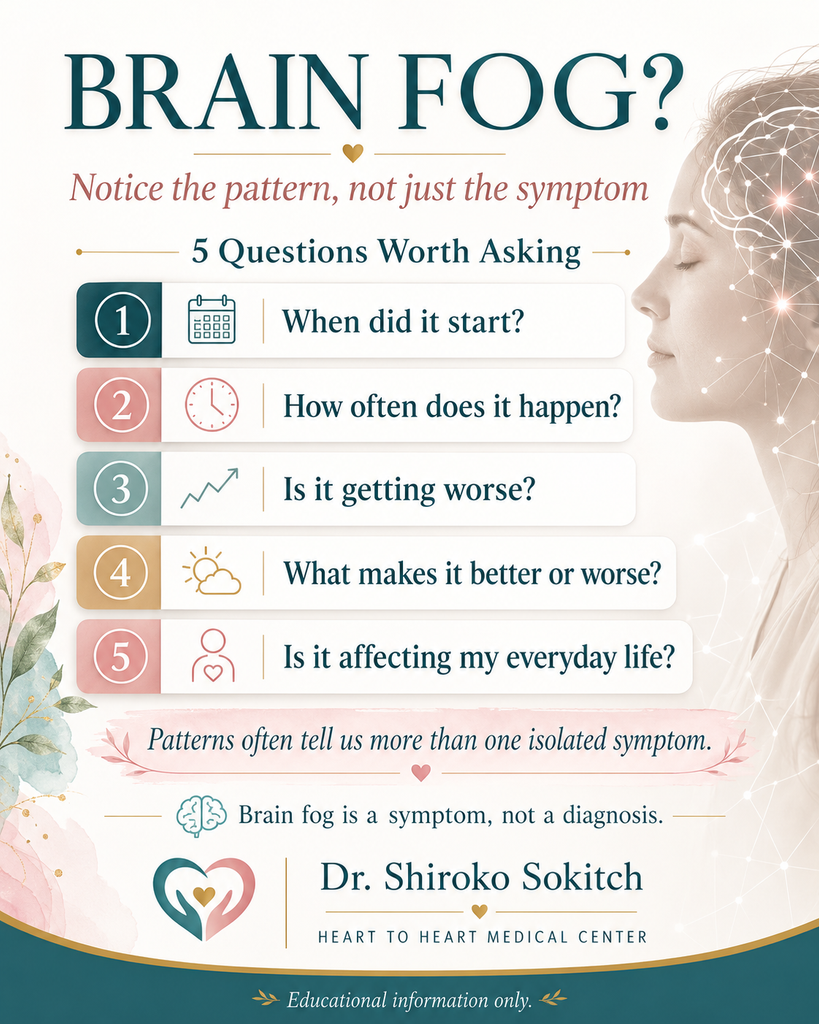
A good next step is to return to your history. Ask yourself again:
- What exactly are you experiencing?
- When did it begin?
- What was happening in your life?
- What medications are you taking?
- How are you sleeping?
- Are your symptoms constant or intermittent?
- Are hormones changing?
- Are you experiencing anxiety or depression?
- Do you have headaches?
- Dizziness?
- Balance problems?
- Digestive symptoms?
- Pain?
- Changes in exercise tolerance
- Has anyone else noticed cognitive changes?
Depending on the answers, your clinician may decide that additional evaluation is appropriate.
This is when I bring in functional medicine and Chinese medicine. Each of these tools allow me to look at your body in ways that go beyond standard medical testing and provide a broader framework for understanding your health.
Specialized testing should not become an automatic substitute for a careful medical history, examination, and appropriate standard evaluation.
The goal is never to order the largest number of tests.
The goal is to ask the right questions.
Five Everyday Ways to Support Your Brain
After discussing all these possible brain fog causes, I do not want you to leave feeling overwhelmed.
There are practical things you can work on.
1. Protect your sleep
Aim for sufficient, consistent, restorative sleep.
If you snore heavily, wake gasping, remain exhausted despite sleeping, or have persistent insomnia, seek medical guidance rather than accepting it as normal aging.
2. Move regularly
- Walk.
- Strength train if appropriate.
- Work on flexibility.
- Do cardiovascular exercise you enjoy.
- Practice balance safely.
- Movement supports far more than your muscles.
3. Know your important health numbers
Work with your healthcare professional to understand the measures relevant to you, including blood pressure, blood glucose, cholesterol, and other individual risk factors.
4. Maintain relationships
- Call someone.
- Meet a friend.
- Join a community activity.
- Spend time with people who make your life meaningful.
- Your relationships are part of your health.
5. Keep learning
- Continue challenging yourself mentally.
- Read.
- Write.
- Study.
- Create.
- Learn something new.
- Use your curiosity.
Healthy aging is not about keeping your brain frozen at age twenty-five.
It is about continuing to support your capacity to adapt, learn, function, connect, and live fully.
What About Standing on One Leg for Ten Seconds?
In the live video I mentioned balance, including the ability to stand on one foot for about ten seconds.
There is an interesting reason this has received attention.
A study of adults between ages 51 and 75 found that being unable to complete a ten-second one-legged stance was associated with a higher risk of death during follow-up, even after several other factors were considered.
That does not mean standing on one leg for ten seconds will make you live longer.
It does not mean failing the test predicts your individual future.
It tells us that balance and physical function can provide useful information about health as we age.
I still like balance work as part of an overall movement program. Balance is a reflection of brain health because it lives in the cerebellum, the part of the brain that regulates balance and movement. You can actually improve any part of your brain by exercising it, so balance can be improved by practicing it for a few minutes each day.
But please be safe.
If you have significant dizziness, neuropathy, weakness, a history of falls, or another condition affecting balance, do not stand unsupported merely because you saw a challenge online.
Use a wall, counter, sturdy chair, physical therapist, trainer, or healthcare professional as appropriate.
Your goal is not to pass a social-media test.
Your goal is to maintain safe physical function.
When Brain Fog Deserves Medical Evaluation
Many brain fog causes are manageable, but there are situations when I do not want you simply watching and waiting.
Consider discussing the change with a healthcare professional if:
- Your memory problems are becoming progressively worse,
- Your family is noticing significant changes,
- You are struggling with responsibilities you previously handled normally,
- You are getting lost in familiar places,
- You are repeatedly making dangerous mistakes,
- you are having difficulty managing medications,
- you are having trouble handling finances,
- Your work performance has changed noticeably,
- Your balance or coordination has changed,
- Your symptoms began after a new medication, illness, injury, or other major health event.
You do not have to wait until you are terrified.
An evaluation is not the same as receiving a frightening diagnosis.
It is an opportunity to understand what is happening.
When It Is an Emergency
Some neurological symptoms should not be treated as ordinary brain fog.
Seek emergency medical help for symptoms such as:
- Sudden confusion,
- Sudden difficulty speaking or understanding speech,
- Sudden weakness or numbness, particularly on one side,
- Sudden vision changes,
- Sudden severe problems with balance or coordination,
- Sudden severe headache with no known cause.
These can be signs of stroke or another neurological emergency.
Please do not drive yourself to an appointment and wait several days to see whether these symptoms disappear.
Emergency symptoms deserve emergency care.
The Most Important Question: What Is the Pattern?
If there is one idea I hope you take from this conversation, it is this:
Notice your patterns.
- The human body gives us information over time.
- Maybe your brain fog appears only when you have slept badly for several nights.
- Maybe it became noticeable during perimenopause.
- Maybe it began after a medication change.
- Maybe it improves during vacations.
- Maybe it appears with periods of tremendous stress.
- Maybe your partner has noticed something you have not.
- Maybe the symptoms are slowly becoming more frequent.
All of those patterns tell us something. They do not automatically diagnose you. But they help us ask better questions. And better questions are usually where good medicine begins.
Putting the Whole Picture Together
At Heart to Heart Medical Center, in Santa Rosa, CA, I approach brain fog by looking at the full pattern around the symptom.
That includes your timeline, sleep, stress, hormone changes, digestion, metabolic health, medications, movement, and how the changes are affecting daily life.
The goal is to understand what changed, what may be contributing, and what deserves attention now.
If you feel that something has changed, bring that observation to your healthcare professional. A clear symptom timeline can help guide the next step.
Worried About Brain Fog? Start With Curiosity, Not Fear
If you are worried about brain fog, you do not need to diagnose yourself tonight.
Start by noticing.
- When does it happen?
- What was your sleep like?
- What was your stress level?
- What medications are you taking?
- What stage of life are you in?
- How is your metabolic health?
- Are you eating regularly?
- Are you moving?
- Are you connecting with other people?
- Is the symptom staying the same—or getting worse?
And most importantly:
Is it changing your ability to live your normal life?
There are many possible brain fog causes, and that is actually a reason for hope rather than panic.
It means one forgotten word does not tell your entire story.
Your memory exists within the context of your whole health.
Your next step is not fear.
Your next step is understanding.
If you have a question about brain fog, memory, perimenopause, or healthy aging, leave a question below or contact Heart to Heart Medical Center in Santa Rosa, CA for individualized guidance.
With love,
Dr. Shiroko Sokitch
Medical Disclaimer
This article is for educational purposes only and is not intended to diagnose, prevent, or treat a medical condition. It does not replace individualized advice from a qualified healthcare professional. Seek emergency medical care for sudden neurological symptoms such as confusion, speech difficulty, one-sided weakness or numbness, sudden vision changes, sudden severe balance problems, or a sudden severe headache.
Recommended References for Publication
- National Institute on Aging. Brain Health.
- National Institute on Aging. Cognitive Health and Older Adults.
- The Menopause Society. Perimenopause: Brain Fog.
- The Menopause Society. Mental Health and Cognition.
- American Academy of Sleep Medicine and Sleep Research Society. Recommended Amount of Sleep for a Healthy Adult.
- Centers for Disease Control and Prevention. Signs and Symptoms of Stroke.
- Araújo CGS, et al. Successful 10-second one-legged stance performance predicts survival in middle-aged and older individuals. British Journal of Sports Medicine.
- Peer-reviewed systematic reviews on computerized cognitive training in mild cognitive impairment and dementia.
- Celiac Disease Foundation. Non-Celiac Gluten/Wheat Sensitivity.