Pain is something we all experience — but when it becomes chronic, it changes how your body works. In my years of practice in acupuncture and functional medicine, I’ve worked with thousands of patients who struggle with pain that simply won’t go away. And in many of those cases, the missing piece in their healing is hormone support.
One of the key concepts I use is the Triangle of Wellness — the balance between hormones, the nervous system, and the immune system. These three systems work together to maintain health. When they’re in balance, the body is supported. When they’re out of balance, healing becomes more difficult.
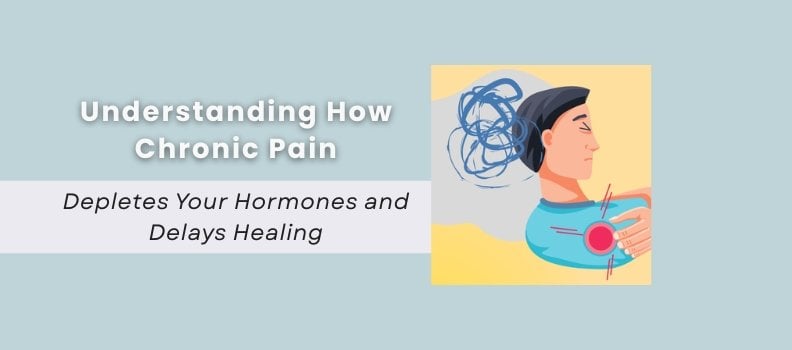
When someone experiences pain, the body’s immediate response is to activate the nervous system and release stress hormones. This includes cortisol, DHEA, and pregnenolone. These hormones are essential to help your body respond to acute pain, such as an injury or sudden trauma. But when pain persists over time — when it becomes chronic — the body stays in that stress state, continuously producing those hormones.
Eventually, the body can’t keep up.
Just like a bucket that slowly empties, your hormone levels start to decline. The longer the pain continues, the more depleted your hormones become. And with those hormones go your energy, your ability to heal, and your overall sense of wellness.
This is especially true as we age. Naturally, our hormone levels decline over time. If someone already has low levels — and then experiences pain, illness, or trauma — the depletion happens more rapidly.
A patient of mine who had shoulder surgery experienced this firsthand. Weeks of constant pain left him with not only low cortisol, but also depleted testosterone, DHEA, and pregnenolone. Though his injury began to heal, his recovery was much slower than expected — because his body didn’t have the hormonal support it needed to complete the healing process.
Interestingly, pregnenolone was used in the 1950s for managing pain and inflammation — before prednisone was introduced. Unlike prednisone, pregnenolone works with your system, not against it. It supports the body’s ability to produce other hormones, without suppressing it.
The takeaway is simple but vital: If you are living with chronic pain, or if you’ve experienced ongoing stress, your hormones are likely affected — and they need support.
Balancing hormones is one of the most powerful ways to restore energy, reduce pain, and improve recovery. Whether your pain is physical or the result of emotional trauma or chronic stress, your body needs hormonal strength to move forward.
Final Thoughts:
Chronic pain is more than a symptom — it’s a signal that your body’s systems need support. Addressing hormone depletion, strengthening the nervous system, and rebuilding immune function can create the foundation your body needs to heal. The sooner you support all three, the better your outcome.
“I always think about it as a little like a bucket. You have a certain bucket of energy available to you — and hormones are kind of your bucket of energy.”
— Dr. Shiroko Sokitch
For a deeper look at this topic, you can watch the full video here: Hormones and Chronic Pain | Dr. Shiroko Sokitch
📧 drshiroko@hthmc.com | 📞 707-524-9640
Love, Dr. Shiroko Sokitch