Seasonal Reboot: Understanding Your Energy, Digestion, and Daily Rhythm
By Shiroko Sokitch, MD
Have you been feeling a little different lately? Maybe you start the morning reasonably well, then feel tired a few hours later. Perhaps food feels less comfortable than it used to, or you are waking up without the sense of rest you expect. You may find yourself saying, “I feel off,” while struggling to explain exactly what that means.
In my recent live conversation, I talked about looking at the patterns around those changes. A seasonal reboot can begin with that kind of attention: noticing the rhythm of your day, identifying what has shifted, and deciding which questions deserve a closer look.
The transition from summer into a busier season can make these questions especially relevant. School schedules return. Work demands change. Dinner happens later because the afternoon filled up. You may still be trying to follow a routine that suited a different kind of week.
I want to help you make sense of those details without giving you another overwhelming assignment. The five seasonal reboot questions below will help you gather your observations and prepare for a conversation about your health. Your observations can support a more specific health conversation and a more realistic plan. If symptoms are persistent, worsening, or interfering with everyday activities, include your healthcare professional in that conversation. Your health deserves attention even when the explanation is still unclear.
Begin your seasonal reboot with what changed
Think back to the first time you realized something felt different. Was it a particular morning? A week when your responsibilities increased? A period after travel? You may not remember an exact date, and that is fine. An approximate starting point can still help you describe the experience.
As part of your seasonal reboot, consider what else was happening. Perhaps you began leaving home earlier, changed your usual lunch break, or spent more evenings catching up on work. These are useful pieces of context. They give you something concrete to discuss alongside your symptoms.
I would also leave room for changes outside your schedule, such as an illness or a medication adjustment. Recording them does not mean you have identified the cause. It means you are giving the next conversation a clearer starting point.
For example, “I have felt tired since my commute changed, and lunch is usually later now” conveys more than “I have no energy.” Your clinician can ask follow-up questions about both the fatigue and the schedule. That is the value of a pattern: it helps organize information while leaving room for more than one explanation.
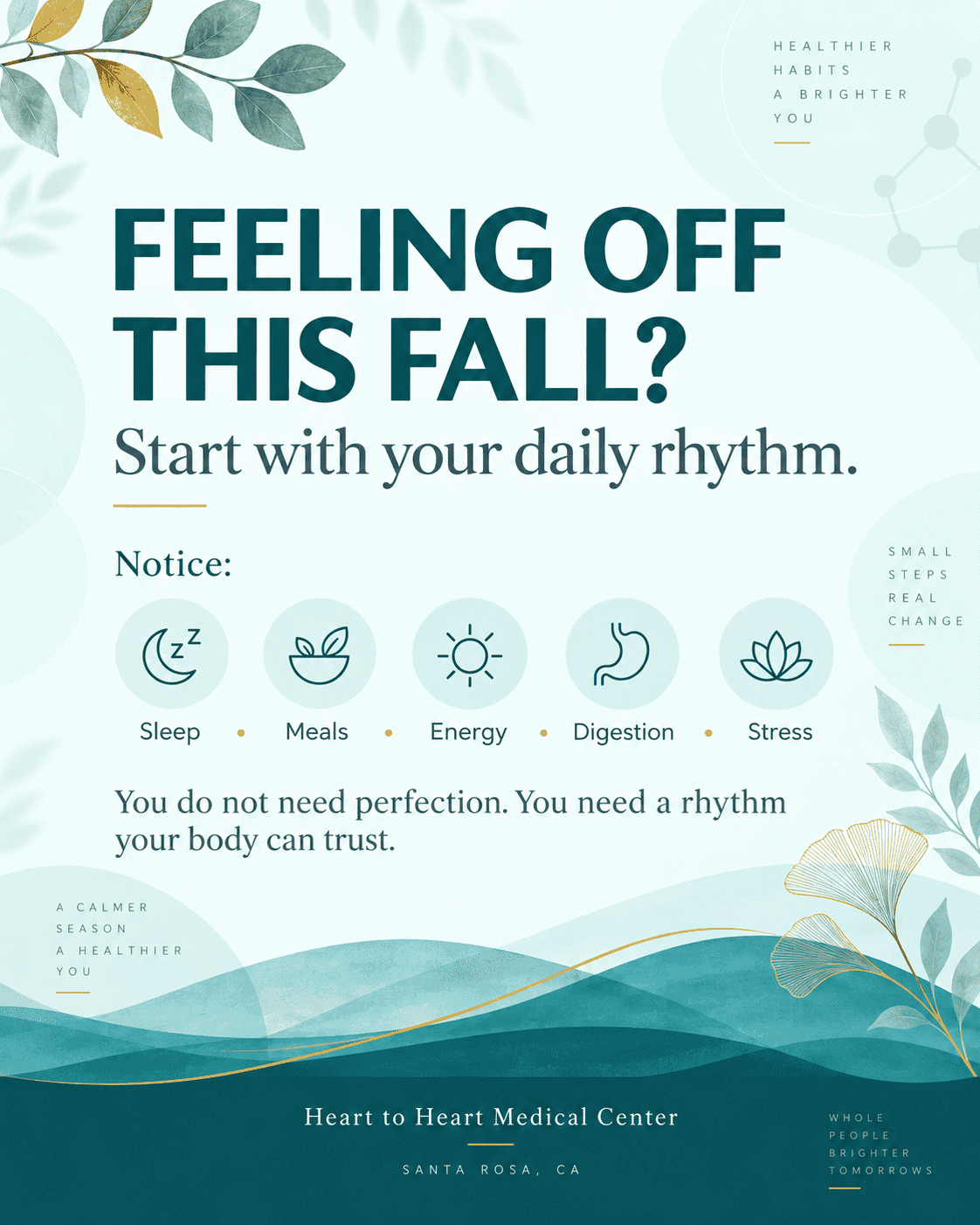
Describe what inconsistent energy feels like for you
Energy can change in different ways. In the live, I mentioned waking tired, feeling reasonably well and then fading, or becoming tired after eating. Those experiences may feel similar when you describe them as fatigue, but the timing can be different.
When describing your energy during a seasonal reboot, use ordinary words. Do you feel sleepy, physically drained, mentally slow, or unable to sustain your usual activities? Is the change brief or does it last through the afternoon? Does it occur on days off as well as workdays? You are describing your experience, so there is no need to find the perfect medical term.
It can also help to say what the change prevents you from doing. Perhaps you are canceling a walk you usually enjoy or struggling through a meeting that used to feel manageable. That practical impact matters alongside the symptom itself.
An energy dip alone cannot tell us whether blood sugar, a hormone issue, sleep, or another factor is involved. I would avoid deciding on a diagnosis from the clock. Your seasonal reboot notes give your healthcare professional the details needed to decide whether further evaluation is appropriate.
Include digestive comfort in your seasonal reboot
Digestion can offer another part of the picture. In the video, I described changes such as feeling unusually full after eating, having less appetite, or noticing that meals feel different. If that sounds familiar, try to describe the sensation rather than grouping everything under “my stomach is off.”
Is there discomfort, fullness, nausea, or a burning feeling? Does it happen while you are eating or later? The National Institute of Diabetes and Digestive and Kidney Diseases describes early fullness and uncomfortable fullness after a meal among symptoms that can occur with indigestion. Several causes are possible, so a symptom list is a starting point for discussion, not a diagnosis. Indigestion symptoms and causes
Keep your seasonal reboot observations specific to what happened. “I felt uncomfortably full after a small lunch” is useful information. A single uncomfortable meal does not establish a food allergy or mean you need an extensive elimination diet.
If digestive symptoms recur, individualized gut and digestive-health care can provide a place to discuss them. Seek medical assessment for a continuing loss of appetite or a persistent change in how much you can comfortably eat, especially when it affects your nutrition or daily life.
Notice whether your day still has room for meals
A seasonal reboot is a chance to look at how meals fit into the day you actually have. In my live, I asked about breakfast, work, and getting children to school because routines are built from those ordinary moments.
Imagine a morning when breakfast used to happen at home, but now you leave earlier. The food you normally enjoy may still be available, yet the time to prepare it has disappeared. A plan that only says “eat better” does not address that practical problem.
Consider what would make the meal possible. You might prepare part of it in advance, keep a suitable option available at work, or protect a break that repeatedly gets moved. These are planning examples, not a prescribed meal schedule. Choose an approach compatible with your health needs and any instructions from your clinician.
Be honest about the obstacles. Budget, appetite, caregiving, transportation, and work rules can all affect what is realistic. Your seasonal reboot plan should take those circumstances seriously. I would rather begin with a change you can carry into an ordinary weekday than an elaborate routine that only works when nothing unexpected happens.
Make room for a nourishing breakfast
In my live, I recommended a protein-containing breakfast within an hour of waking, particularly when discussing people who have trouble sleeping. If mornings have become rushed or meals keep getting pushed back, breakfast is one part of your daily rhythm we can look at together.
Think about what would make breakfast easier on a typical morning. You might prepare ingredients the evening before, choose a simple meal you enjoy, or leave enough time to eat before the day gets busy. A useful routine should fit your appetite, responsibilities, and the eating plan recommended for you.
If you already follow a particular eating schedule, let me know how it is working for you. We can consider your medication schedule, nutritional needs, and health history when deciding whether an adjustment would be helpful.
For your seasonal reboot, notice how your morning unfolds and where you would welcome more support. The aim is to make regular nourishment easier to fit into your life.
Review dinner and bedtime during your seasonal reboot
Evenings deserve their own attention. A late meeting, school activity, or commute can shift dinner closer to bedtime. Looking at that sequence may help you understand when digestive discomfort appears.
In the live, I suggested leaving two or three hours between dinner and bed. The most specific supporting guidance reviewed here concerns nighttime reflux: NIDDK notes that eating at least three hours before lying down or going to bed may improve those symptoms. That recommendation addresses reflux and should be applied with your individual needs in mind. Eating habits and nighttime reflux
If late dinner is a practical issue, think about which part of the evening is flexible. Could you arrange food earlier, simplify preparation, or discuss a more suitable meal pattern with your clinician? The answer may depend on your work, your family, and any medical instructions you already follow.
Keep your seasonal reboot changes manageable. You do not need to redesign your entire evening to identify one obstacle. Describing the timing of a recurring symptom can be a useful first step even before you know how to change the routine around it.
Ask what restorative sleep means in your life
Sleep was another pattern I raised in the video. You may notice that bedtime has drifted later or that waking feels harder even when the clock suggests you spent a full night in bed. In your seasonal reboot notes, describe both your schedule and how you feel on waking.
The National Heart, Lung, and Blood Institute recommends making enough time for sleep and keeping sleep and wake times consistent. It also suggests a quieter period before bed and a sleep environment that is cool, dark, and quiet. These are helpful foundations to consider when your routine has become less settled. Healthy sleep habits
For the sleep portion of your seasonal reboot, choose the part you can influence. If your evenings are crowded, preparing tomorrow’s essentials earlier may help you protect a wind-down period. If you share a household, a conversation about quiet time may be more useful than another personal reminder.
I also want you to acknowledge responsibilities that limit your options. Caring for someone overnight or working changing shifts requires a different kind of planning. Explain those constraints when you seek guidance so that the advice can fit your situation. Continuing sleep difficulties deserve attention rather than an expectation that you should manage them alone.
Include stress without making it the whole explanation
Changes in routine often arrive with changes in responsibility. Going back to school, managing a household, or beginning a demanding work period can fill the spaces that once offered recovery. In my live, I encouraged looking at how to stay balanced within the patterns of your life.
Long-term stress can contribute to or worsen health problems, including digestive and sleep difficulties. The National Center for Complementary and Integrative Health describes these connections while recognizing that people respond to stress in different ways. Stress and health
To make stress part of your seasonal reboot check-in, identify one recurring pressure. Perhaps your afternoon is packed so tightly that there is no meal break, or the last task of the day regularly expands into the evening. That gives you a specific problem to discuss with the people involved.
Support might mean sharing a task, adjusting an expectation, or protecting a short pause between responsibilities. These are examples of how a seasonal reboot could help you make room in a day. They are not an explanation for every symptom. Medical concerns and practical support can be addressed together, with respect for what you are experiencing.
Remember the environment around your routine
I also mentioned air quality in the live because the environment belongs in a conversation about how we feel. Here in Santa Rosa, smoke conditions are something worth checking when planning time outdoors. This article is not reporting a current smoke event or a measured air-quality level.
Use a current local source rather than assuming that a particular season tells you what the air is like. AirNow’s guidance explains how to respond when smoke affects an area, including adjusting activity and following local recommendations. People with existing health conditions may need specific advice from their healthcare professional. AirNow smoke guidance
In your seasonal reboot notes, record a relevant exposure if you noticed one, such as spending time outdoors during smoky conditions. Keep the description factual. A symptom occurring that day does not prove smoke caused it.
Environmental information can help put the day in context, just as meal timing and workload can. It also reminds us to choose practical steps that fit actual conditions. If the air is poor, a different location or time for an activity may be more appropriate than following a routine without checking.
5 helpful questions for your seasonal reboot
Use these five seasonal reboot questions to gather the details we have discussed. You can use a notebook or a private note on your phone. This is an organizational aid, not a diagnostic tool or a requirement to track every hour of your day.
- What felt different, and roughly when did it happen?
- When did you sleep, wake, and eat around that experience?
- What changed in your routine, workload, or environment?
- How did the symptom affect your usual activities?
- What question would you like to bring to your clinician?
Keep each entry brief. For example, “Lunch was later than usual; I felt tired during the afternoon meeting; this also happened earlier in the week.” That is enough to create a useful conversation starter. You do not need to assign a cause or rate yourself.
If recording symptoms makes you more anxious, simplify the note or ask your clinician what information would be most useful. The purpose is to make communication easier. Stop tracking and seek appropriate care if a symptom needs prompt attention; completing the page should never delay an evaluation.
Choose one manageable seasonal reboot change
Once you have a clearer description, consider which practical adjustment is both reasonable and within your control. If meals are repeatedly displaced by meetings, protecting a break may be the first issue to solve. If your evening preparation keeps expanding, simplifying one task may make bedtime easier to protect.
Treat your seasonal reboot adjustment as a small planning decision. Name the action, when it will happen, and what could get in the way. “Prepare tomorrow’s breakfast items while cleaning up dinner” is easier to follow than an intention to have a healthier morning.
Then notice how your seasonal reboot plan works in real life. Was the action possible? Did it reduce the obstacle you were trying to address? Those questions can be useful even if a symptom does not immediately change. Practical progress and medical evaluation answer different parts of the situation.
Avoid stacking several new diets, supplements, and routines at once in response to feeling off. A more deliberate approach makes it easier to describe what you changed and to discuss it with your healthcare professional. The next step should bring clarity and support, not another layer of pressure.
Where a guided Seasonal Reboot may fit
If you would like more structure as you rebuild your habits, my Seasonal Reboot offers a guided 14-day plan. It includes two shakes and two supplement packets each day, alongside meals. The nutritional products are intended to support the body’s normal detoxification processes and liver function.
You will also have meal plans, shopping lists, recipes, and instructions for using Well World. These resources help you organize what to buy, prepare meals, and follow the daily plan.
During Seasonal Reboot, I recommend one or two paleo-style meals each day, as directed in your individual plan. Eating is part of the program. Follow the provided meal plan alongside the shakes and supplements rather than adding a fasting routine.
The program uses the Designs for Health Plant Protein Cleanse Plus Detox Program, a plant-based 14-day nutritional program. The accompanying meal plan includes food choices that we can review with your dietary needs in mind.
If your goals include weight management, more comfortable digestion, metabolic health, or liver-health support, we can discuss how Seasonal Reboot may fit into your care. I want to understand what you hope to improve and help you choose an approach that suits your health history and daily life.
To learn more or arrange your purchase, please contact my office directly. Email drshiroko@hthmc.com or call 707-524-9640. We can explain what is included, confirm current pricing, and help you determine whether Seasonal Reboot is appropriate for you.
Know when the next step is medical care
A changing routine is useful context, but continuing symptoms deserve their own assessment. Contact your healthcare professional when fatigue, digestive changes, or poor sleep persist, worsen, or disrupt activities you normally manage. You can bring your observations without having worked out an explanation first.
Some digestive symptoms need prompt attention. NIDDK advises seeking care for signs such as frequent vomiting, trouble swallowing, unintentional weight loss, severe ongoing abdominal pain, black stools, or blood in vomit. Chest pain or shortness of breath warrants urgent medical attention. Do not wait to see whether a new routine or supplement makes these symptoms go away. When indigestion symptoms need care
When you arrange an appointment, share your main concern, when it began, and how it affects your day. Bring a current medication and supplement list. If something changed recently, mention it without assuming it is responsible.
You deserve a conversation that takes both your symptoms and your circumstances seriously. Understanding your daily rhythm can support that conversation, and individualized care can help you decide what should happen next.
Let us find a practical next step together
At Heart to Heart Medical Center in Santa Rosa, CA, I welcome a conversation about the changes you are noticing and the kind of support you are looking for. Whether your concern centers on meals, digestive comfort, stress, or a routine that no longer fits, the starting point is your experience.
You can learn more about nutrition and diet counseling or contact my office to book a call. If Seasonal Reboot interests you, ask about the current program details and whether it is appropriate for your needs.
You do not have to arrive with a perfect explanation. Whether you are considering Seasonal Reboot or another form of support, a clear description of what has changed is enough to begin.
This article provides general education and does not replace individualized medical advice, diagnosis, or treatment. Discuss fasting, dietary changes, and supplements with your healthcare professional before changing an existing care plan.
References and link status
The article’s descriptive links provide the reader-facing citations. Sources reviewed: NIDDK indigestion guidance; NIDDK GERD meal-timing guidance; NHLBI healthy sleep habits; NCCIH stress guidance; AirNow smoke guidance. Manufacturer naming and positioning were checked on the Plant Protein Cleanse Plus product information page. This manufacturer link is an internal editorial reference only, not a shopper CTA.
Practice pages opened successfully: Contact, Nutrition & Diet Counseling, and Gut & Digestive Health. The edited brain-fog article was read as a text-structure reference. A pixel-level desktop/mobile review of that webpage was not performed. Form submission, appointment completion, WordPress rendering, and resource delivery remain untested.