For more than 20 years, women have been told to be afraid of hormone therapy.
Maybe you have heard things like:
- “Hormones cause breast cancer.”
- “You should never take hormones after 60.”
- “Just suffer through menopause. It is natural.”
These messages created a lot of fear. Millions of women were left struggling with hot flashes, night sweats, brain fog, anxiety, depression, low libido, and deep fatigue, feeling like there was nothing safe they could do.
Recently, something big happened.
The FDA quietly removed the black box warning on hormone replacement therapy (HRT) for women.
That black box warning is one of the strongest “danger” signals in medicine. Its removal is a sign that the story we have been told about hormones was incomplete and, in many ways, misleading. The head of the FDA said it was the biggest mistake of modern medicine to prevent so many women from receiving helpful hormone replacement therapy.
In this blog, I want to walk you through what this change means for you, how I look at hormones in your whole-body healing, and how you can start asking better questions about your health.
This is not about pushing you to take hormones. It is about giving you clarity, so you can make empowered choices with the right information.
What Actually Changed?
In the early 2000s, a large study on hormone therapy led to headlines that terrified women and doctors. The message that spread was simple and scary: “Hormones cause breast cancer and heart disease.”
As a result:
- Millions of women stopped their hormones overnight.
- Many doctors became too afraid to prescribe HRT.
- A generation of women suffered through difficult menopausal symptoms without support.
Over time, researchers started looking more closely at the original data. What they found was much more nuanced than the headlines.
Newer analyses showed that:
- The type of hormone, the dose, and how it is given (pill, patch, cream) matter a lot.
- Age and timing matter. Starting hormones closer to menopause has different effects than starting them much later.
- In many women, hormones can support heart health, protect bones, and improve quality of life.
The FDA’s decision to remove the black box warning reflects this updated understanding. It does not mean “everyone should be on hormones.” It means the blanket fear is no longer backed by evidence in the way we once thought.
What The Newer Science Suggests About HRT
Here is what more recent research and clinical experience are showing:
- Heart health: For many women who start HRT around the time of menopause, estrogen may support cardiovascular health instead of harming it.
- Bones and osteoporosis: Estrogen is a key protector of bone density. Without it, the risk of osteoporosis rises sharply. Hormone therapy can help reduce that risk.
- Brain and mood: Many women notice changes in memory, focus, sleep, and mood as hormones decline. Estrogen and progesterone play important roles in brain function, emotional balance, and sleep regulation.
- Overall wellbeing: For the right person, HRT can bring back a sense of vitality, energy, and connection to their own body.
Does this mean HRT is completely risk free? No.
But it does mean the story is far more balanced than the old warnings suggested. The real question is not “Are hormones good or bad?” but “Are hormones right for you, in the right form, at the right time, and in the right dose?”
“Am I Too Old For Hormones?”
You may have heard that “no one should be on hormones after 60.” This has been a common rule of thumb in conventional medicine.
Here is the truth: there is no magical birthday where your body suddenly stops deserving support.
What we do know is:
- Risks and benefits shift with age.
- The way hormones are given matters. For example, transdermal estrogen (through the skin) behaves differently than high-dose oral estrogen.
- Your individual history, genetics, lifestyle, and other conditions all influence safety.
I care much more about who you are and how your body is functioning than about a single number on your birthday cake.
For some women over 60, carefully chosen and monitored hormone therapy can still be part of a healthy, vibrant life. For others, it may not be the right fit. The key is a thoughtful, personalized conversation, not a one-size-fits-all rule.
Hormones And Your Brain: It Is Not Just About Hot Flashes
One of the most heart-breaking things I hear from women is:
“I feel like I am losing myself.”
They cannot find their words. They walk into a room and forget why. They feel anxious or depressed for “no reason.” They cannot sleep. They feel like their spark is fading.
These shifts are often connected to hormonal changes.
Estrogen and progesterone influence:
- Memory
- Focus
- Sleep cycles
- Mood and emotional balance
When hormones drop, the brain feels the impact.
Supporting hormone balance can, for some women, ease brain fog, improve sleep, and bring emotional steadiness back into reach. It is not the only tool, but it is an important one that we should not ignore out of fear.
The Triangle Of Wellness: Why Hormones Are Only One Piece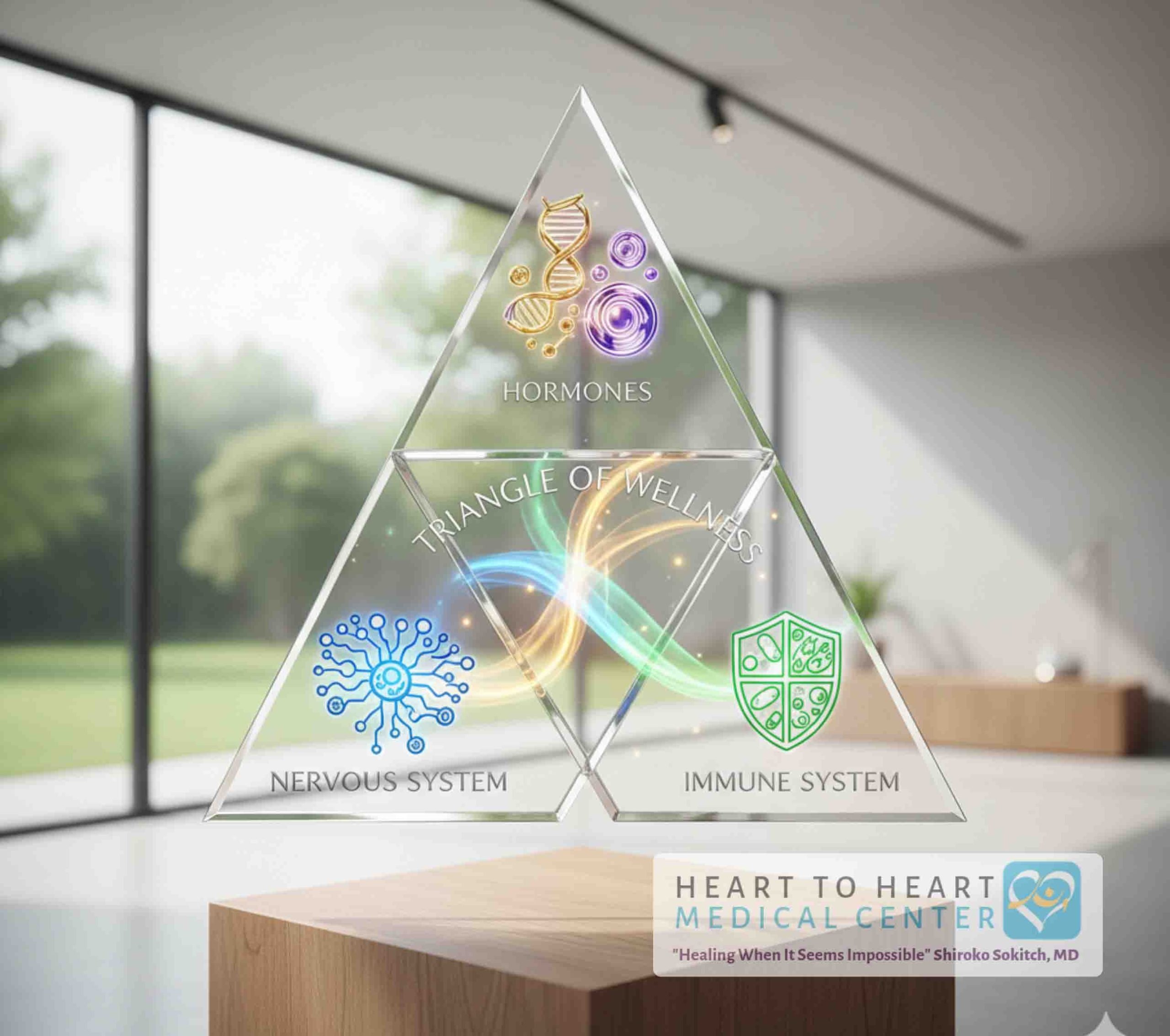
In my work, I often talk about what I call the Triangle of Wellness:
- Hormones
- Nervous system
- Immune system
These three systems constantly talk to each other. When they are in balance, your body has the energy and information it needs to heal. When one side of the triangle is out of balance, the others start to wobble too.
For example:
- Chronic stress can dysregulate your nervous system, which then affects your hormones and your immune resilience.
- Long-standing infections or gut issues can activate the immune system and indirectly throw your hormones off.
- Hormonal imbalances can affect your mood, sleep, and immune function.
This is why my approach blends both Western medicine and Chinese medicine. I might use:
- Testing and lab work to see what your hormones, nutrients, and markers of inflammation are doing.
- Acupuncture to calm the nervous system and restore energetic flow.
- Supplements, herbs, and lifestyle support for digestion, immunity, and stress.
- Hormone therapy when it is appropriate and safe for your unique body.
The goal is not just to “fix your hormones.” It is to give your body enough energy and balance so that it can heal itself as fully as possible.
How I Help Patients Decide About Hormones
I want to be very clear: I am not telling you to run out and get hormones.
My role is to guide you through a thoughtful, grounded process:
- Listen to your story. Your symptoms, your history, your fears, and your goals all matter.
- Look at your whole picture. We may do lab tests for hormones, thyroid, nutrients, inflammation, and more. I also assess digestion, immunity, nervous system health, and emotional stress.
- Clarify your options. Hormones are one option. There are also non-hormonal medications, herbal and natural supports, nutritional strategies, acupuncture, and stress healing tools.
- Discuss risks and benefits. We walk through how each option might help you and what the possible downsides are for your specific situation.
- Decide together. You are never forced or pressured. My job is to bring science, experience, and heart. Your job is to stay connected to your inner “yes” or “no.”
This is what integrative, personalized care really looks like. It honors both the data and your intuition.
Questions To Ask Your Doctor About HRT
If you are curious about hormones, here are some simple questions you can bring to your provider:
- Given my history, do you think hormone therapy might be an option for me?
- What forms of hormone therapy do you use (pill, patch, gel, cream, bioidentical, etc.) and why?
- How would you monitor me to keep things as safe as possible?
- What benefits might I realistically expect?
- What side effects or risks should I watch for?
- Are there non-hormonal options that could also help my symptoms?
If you do not feel heard, or you are brushed off with fear based on outdated information, it may be time to seek a second opinion.
You deserve a thoughtful conversation, not a frightened reflex.
 A Gentle Reminder: Your Body Is Not Broken
Whether you choose hormone therapy or not, I want you to take this in:
Your body is not broken. It is speaking.
Symptoms are not your enemy. They are messages.
Hot flashes, anxiety, brain fog, exhaustion, low libido, weight changes, sleep problems these are all signals that something in your Triangle of Wellness needs attention.
The removal of the FDA’s black box warning on hormones is a step toward a more honest and hopeful conversation about women’s health. It opens the door for more options, less fear, and more healing.
You are allowed to feel good in your body. You are allowed to have energy, clarity, and joy at every age.
If You Want Support
If this topic speaks to you, you do not have to figure it out alone.
- Save this blog so you can refer to it when talking with your doctor.
- Share it with a friend who feels confused or scared about hormones.
- If you want guidance tailored to your body and your story, you can reach out to my clinic and explore working together. Book an appointment online.
Your hormones are only part of the story. With the right support, your whole body can move toward balance, healing, and a life that feels more like you again.