7 Tips for Functional Medicine for High Blood Pressure for a Healthy Lifestyle
Table of Contents
- Why High Blood Pressure Deserves Attention
- The Functional Medicine for High Blood Pressure Perspective
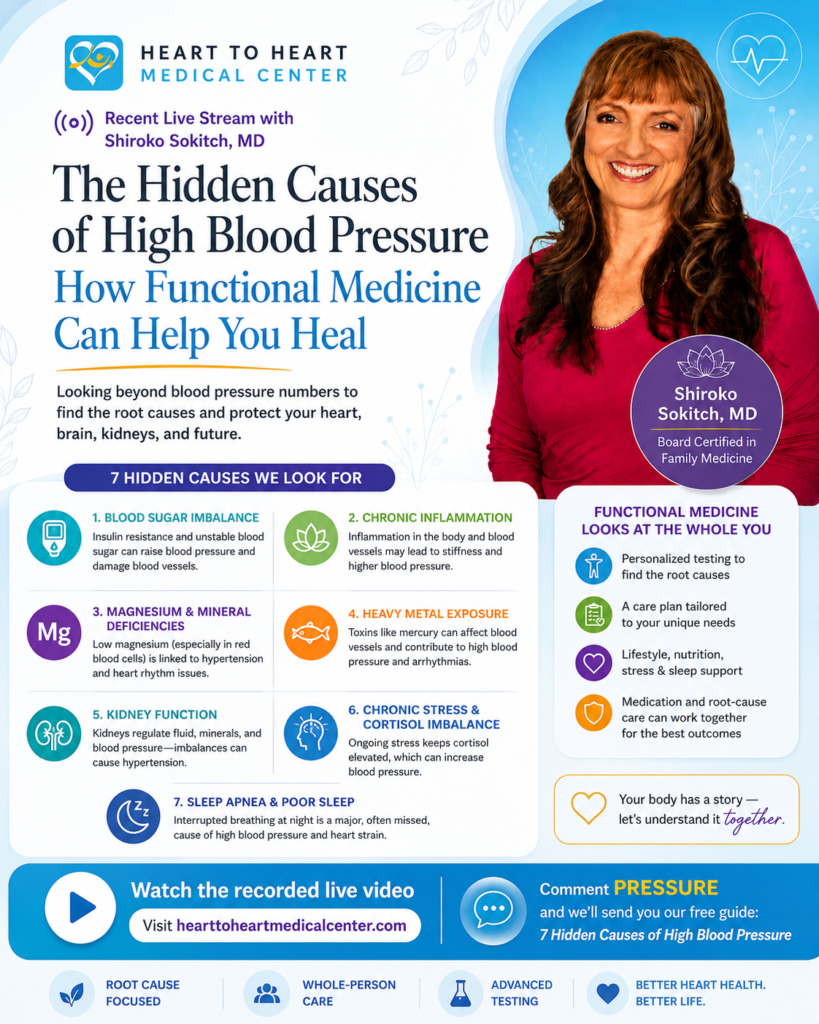
- Root Cause #1: Blood Sugar Imbalance
- Root Cause #2: Chronic Inflammation
- Root Cause #3: Magnesium Deficiency and Mineral Imbalance
- Root Cause #4: Heavy Metal Exposure
- Root Cause #5: Kidney Function and Blood Pressure
- Root Cause #6: Chronic Stress and Cortisol Dysregulation
- Root Cause #7: Sleep Apnea
- Why Medication Matters
- If You Only Do One Thing…
- Common Mistakes People Make
- Frequently Asked Questions for Functional Medicine for High Blood Pressure
- Final Thoughts About Functional Medicine for High Blood Pressure
- References
Why I Believe High Blood Pressure Deserves More Attention
One of the most common concerns I see in my practice is high blood pressure.
In fact, millions of people live with hypertension, and many of them have been told some version of the same message:
“Take this medication and monitor your numbers.”
Now, let me be clear. Blood pressure medication can be incredibly important. In many cases, it can be life-saving. I prescribe medications when appropriate, and I believe they play a valuable role in protecting the heart, brain, kidneys, and blood vessels.
However, after practicing medicine for many years and helping hundreds of patients improve their cardiovascular health, I’ve learned that there is often a deeper question we need to ask:
Why is the blood pressure elevated in the first place?
That question is at the heart of functional medicine.
Rather than focusing only on managing symptoms, functional medicine seeks to understand what may be contributing to the problem. It looks for underlying imbalances that may be affecting the body’s ability to regulate itself effectively.
During a recent live discussion, I shared several of the hidden contributors to hypertension that I frequently investigate in my patients. These are factors that often receive far less attention than they deserve, yet they may significantly influence cardiovascular health.
Before we explore those hidden causes, let’s talk about why high blood pressure should never be ignored.
What High Blood Pressure Can Do to the Body
One of the reasons I take hypertension so seriously is because the damage often happens silently.
Many people feel completely fine.
They have no headaches.
No dizziness.
No obvious symptoms.
Yet elevated blood pressure may still be causing damage behind the scenes.
Over time, uncontrolled hypertension can affect:
- The heart
- The brain
- The kidneys
- The eyes
- The blood vessels
When blood pressure remains elevated for long periods, blood vessels may become less flexible and less efficient. The heart must work harder to circulate blood throughout the body.
This increased strain can contribute to serious complications including:
- Heart attack
- Stroke
- Heart failure
- Kidney disease
- Vision problems
I recently worked with a patient who experienced a transient ischemic attack (TIA), often called a “mini-stroke,” related to uncontrolled blood pressure. He was only in his 50s.
Stories like this remind me why prevention matters so much.
My goal is not simply to help people lower a number on a blood pressure monitor.
My goal is to help them protect their future health.
Why Functional Medicine for High Blood Pressure Looks Beyond the Numbers
Traditional medicine often asks:
“How do we lower blood pressure?”
Functional medicine asks:
“Why is blood pressure elevated?”
Both questions matter.
The first question helps reduce immediate risk.
The second question helps uncover potential contributors that may otherwise go unnoticed.
I often see patients who are taking three, four, or even five medications and still struggle with elevated blood pressure.
This doesn’t necessarily mean the medications are failing.
Sometimes it means we haven’t fully identified the factors driving the condition.
When I evaluate someone with hypertension, I consider multiple systems throughout the body.
I look at:
- Blood sugar regulation
- Inflammation
- Nutrient status
- Mineral balance
- Kidney function
- Hormonal health
- Stress physiology
- Sleep quality
- Environmental exposures
These systems are interconnected.
When one becomes imbalanced, it may affect the others.
Let’s begin with one of the most common contributors I see.
Read our blog about the “Confession of a sugar addict“
Hidden Root Cause #1: Blood Sugar Imbalance
If you’ve followed my work for any length of time, you’ve probably heard me talk about blood sugar.
That’s because blood sugar affects far more than diabetes.
It influences inflammation, energy, hormones, brain function, cardiovascular health, and blood pressure.
Many people don’t realize that insulin resistance and blood sugar dysregulation are strongly associated with hypertension.
When blood sugar levels remain elevated, several things may happen:
- Inflammation may increase
- Blood vessel function may become impaired
- Oxidative stress may rise
- The kidneys may retain more sodium
- Blood pressure regulation may become more difficult
In my practice, I frequently see patients whose blood sugar challenges were contributing significantly to their cardiovascular concerns.
This is one reason I often recommend reducing highly processed carbohydrates and focusing on whole foods.
The DASH Diet and Mediterranean Diet
Many people have heard of the DASH diet for hypertension.
DASH stands for Dietary Approaches to Stop Hypertension.
It has been extensively studied and is often recommended for individuals with high blood pressure.
The DASH diet shares many similarities with the Mediterranean diet, another eating pattern that I frequently discuss with patients.
Both emphasize:
- Vegetables
- Fruits
- Beans and legumes
- Healthy fats
- Lean proteins
- Whole foods
At the same time, they reduce:
- Refined sugar
- Processed foods
- Excessive refined flour products
- Highly processed snacks
One simple recommendation I often give patients is this:
Reduce the “white foods.”
That includes:
- White bread
- White rice
- Pastries
- Sugary cereals
- Processed snack foods
When people begin replacing these foods with nutrient-dense whole foods, I often see improvements not only in blood sugar but in overall health.
Practical Ways to Improve Blood Sugar Balance Using Functional Medicine for High Blood Pressure
If blood sugar imbalance is contributing to hypertension, here are several simple places to start:
Eat Protein with Every Meal
Protein helps stabilize blood sugar and reduce dramatic spikes.
Examples include:
- Eggs
- Fish
- Poultry
- Beans
- Lentils
- Greek yogurt
Increase Fiber Intake
Fiber slows the absorption of sugar into the bloodstream.
Excellent sources include:
- Vegetables
- Chia seeds
- Flax seeds
- Legumes
- Berries
Reduce Liquid Sugar
One of the fastest ways to overwhelm blood sugar regulation is through sugary beverages.
Reducing:
- Soda
- Sweet tea
- Energy drinks
- Excess fruit juice
- Alcohol
- Fancy coffee drinks
can have a meaningful impact.
Prioritize Movement
Even a simple walk after meals may support healthier glucose regulation.
Hidden Root Cause #2: Chronic Inflammation
The next hidden contributor I frequently investigate is inflammation.
Inflammation is one of the most misunderstood concepts in modern medicine.
Many people associate inflammation only with pain.
They think:
“If I don’t hurt, I must not be inflamed.”
Unfortunately, that’s not always true.
Inflammation can exist quietly for years.
I often describe it as a slow-burning fire inside the body.
You may not notice it.
You may not feel it.
Yet it may still affect:
- Blood vessels
- Metabolism
- Immune function
- Cardiovascular health
Research has shown that inflammation plays a role in many chronic diseases, including hypertension.
How I Evaluate Inflammation Related to Functional Medicine for High Blood Pressure
One of the tests I commonly discuss is called:
High-Sensitivity C-Reactive Protein (hs-CRP)
This blood test can provide insight into inflammatory activity within the body.
An elevated hs-CRP does not tell us exactly why inflammation is present.
However, it may signal that further investigation is needed.
Possible causes include:
- Blood sugar imbalance
- Chronic infection
- Gut dysfunction
- Autoimmune activity
- Excess body fat
- Environmental exposures
The goal is not simply to identify inflammation.
The goal is to understand what may be driving it.
Why Inflammation Matters for Blood Pressure
Healthy blood vessels need flexibility.
When inflammation becomes chronic, blood vessels may become less responsive and less able to maintain optimal function.
Over time, this may contribute to increased cardiovascular strain.
This is one reason why addressing inflammation often becomes part of a broader cardiovascular wellness strategy.
Simple Anti-Inflammatory Habits I Recommend Related to Functional Medicine for High Blood Pressure
Many patients ask me:
“What’s the best anti-inflammatory supplement?”
My answer often surprises them.
Before supplements, I focus on foundations.
Prioritize Sleep
Poor sleep can significantly increase inflammatory activity.
Eat More Colorful Plants
The pigments that create bright colors in vegetables and fruits often contain beneficial phytonutrients.
Move Daily
Regular physical activity supports healthy inflammatory balance.
Manage Stress
Chronic stress and inflammation frequently go hand in hand.
Support Gut Health
A healthy digestive system can play a major role in regulating immune function and inflammation.
The next hidden contributors—magnesium deficiency, mineral imbalance, heavy metal exposure, kidney health, chronic stress, cortisol dysregulation, and sleep apnea—may be even more surprising, and we’ll explore those in the next section.
Hidden Root Cause #3: Magnesium Deficiency and Mineral Imbalance
One of the most overlooked contributors to high blood pressure is magnesium deficiency.
I often tell my patients that magnesium is one of the most important minerals in the body. It is involved in hundreds of biochemical reactions and plays a critical role in:
- Blood vessel function
- Nerve signaling
- Muscle relaxation
- Energy production
- Heart rhythm regulation
Yet many people are deficient without realizing it.
One reason this can be difficult to identify is that standard blood testing doesn’t always tell the full story.
Most conventional laboratory tests measure serum magnesium, which represents the magnesium circulating in the bloodstream.
The challenge is that your body works very hard to keep serum magnesium levels stable.
If necessary, it may pull magnesium from tissues and cells to maintain normal blood levels.
As a result, serum magnesium can appear normal even when cellular magnesium levels are less than optimal.
This is why I sometimes look at red blood cell magnesium testing when appropriate.
When magnesium levels are inadequate, blood vessels may become more prone to constriction, making it more difficult to maintain healthy blood pressure regulation.
Other Minerals Matter Too in Functional Medicine for High Blood Pressure
Magnesium is not the only mineral involved in cardiovascular health.
The body functions through balance.
Potassium, calcium, sodium, and trace minerals all influence:
- Fluid regulation
- Blood vessel tone
- Heart function
- Nervous system activity
When mineral balance becomes disrupted, blood pressure regulation may become more challenging.
This is one reason why I look at the whole picture rather than focusing on a single nutrient.
Magnesium-Rich Foods I Recommend Related to Functional Medicine for High Blood Pressure
Whenever possible, I encourage patients to start with food.
Some excellent sources of magnesium include:
- Pumpkin seeds
- Almonds
- Cashews
- Spinach
- Swiss chard
- Black beans
- Avocados
- Dark chocolate
Small dietary improvements can create meaningful changes over time.
Hidden Root Cause #4: Heavy Metal Exposure
This is often one of the most surprising topics I discuss with patients.
Many people have never considered that environmental toxins may influence blood pressure.
Yet environmental medicine is an important part of functional medicine.
Every day, we are exposed to substances through:
- Food
- Water
- Air
- Household products
- Work environments
Most exposures occur in small amounts.
However, long-term accumulation may affect health.
One concern I occasionally see is heavy metal exposure.
Heavy metals that may affect cardiovascular health include:
- Mercury
- Lead
- Cadmium
- Arsenic
Among these, mercury is one of the most common issues I encounter.
Interestingly, some of the patients I identify with elevated mercury levels are people who are actively trying to eat healthy.
For example, I have worked with patients who eat large amounts of fish because they understand the benefits of omega-3 fatty acids.
While fish can absolutely be part of a healthy diet, some varieties may contain higher levels of mercury.
I’ve seen patients who believed they were making excellent dietary choices discover elevated mercury levels during testing.
Why Heavy Metals Matter in Functional Medicine for High Blood Pressure
Research suggests that heavy metal exposure may influence:
- Oxidative stress
- Blood vessel health
- Cardiovascular function
- Heart rhythm regulation
In some individuals, heavy metals may contribute to:
- Hypertension
- Arrhythmias
- Fatigue
- Brain fog
This does not mean everyone with hypertension has heavy metal toxicity.
However, when blood pressure remains difficult to control despite appropriate interventions, environmental factors may deserve consideration.
Hidden Root Cause #5: Kidney Function
The kidneys and blood pressure are deeply connected.
In fact, healthy blood pressure depends heavily on healthy kidney function.
Your kidneys help regulate:
- Fluid balance
- Electrolyte balance
- Hormone production
- Blood vessel signaling
When kidney function becomes impaired, blood pressure often rises.
At the same time, elevated blood pressure can damage the kidneys.
This creates a cycle that can become progressively more difficult to break if left unaddressed.
Because of this relationship, I routinely consider kidney health when evaluating hypertension.
Signs That Kidney Function May Need Further Evaluation Related to Functional Medicine for High Blood Pressure
While only proper medical testing can determine kidney function, some individuals may benefit from further evaluation if they have:
- Long-standing hypertension
- Diabetes
- Family history of kidney disease
- Abnormal laboratory findings
- Swelling in the legs or feet
Protecting kidney health is one of the reasons blood pressure management is so important as part of Functional Medicine for High Blood Pressure.
Hidden Root Cause #6: Chronic Stress and Cortisol Imbalance
If there is one factor that has become increasingly important in recent years, it is stress.
Many people are carrying enormous burdens.
They are managing:
- Careers
- Families
- Financial concerns
- Health challenges
- Caregiving responsibilities
Often all at the same time.
The body was designed to handle short-term stress.
What it was not designed for is constant stress.
When stress becomes chronic, the brain activates what is known as the hypothalamic-pituitary-adrenal (HPA) axis.
This system influences the release of hormones including:
- Cortisol
- Adrenaline
- Noradrenaline
These hormones help us respond to challenges.
In the short term, they are protective.
The problem occurs when they remain elevated for extended periods.
How Chronic Stress Affects Blood Pressure
Persistently elevated stress hormones may contribute to:
- Increased blood pressure
- Increased inflammation
- Poor sleep
- Blood sugar dysregulation
- Weight gain
- Cardiovascular strain
I frequently tell patients that undergo Functional Medicine for High Blood Pressure that stress is not just emotional.
Stress is biochemical.
Your body responds to chronic stress whether you consciously recognize it or not.
This is why stress management is not simply a wellness trend.
It is a legitimate component of cardiovascular care.
Stress Reduction Strategies I Often Recommend Related Functional Medicine for High Blood Pressure
Some of the most effective strategies are surprisingly simple.
Daily Walking
Walking helps regulate the nervous system and reduce stress hormone activity.
Deep Breathing
Even a few minutes per day can help activate the body’s relaxation response.
Meditation and Mindfulness
These practices support resilience and nervous system balance.
Meaningful Relationships
Human connection is one of the most powerful forms of healing.
Time in Nature
Spending time outdoors has been shown to support stress reduction and overall well-being.
Hidden Root Cause #7: Sleep Apnea and Poor Sleep
If I had to choose one hidden cause of hypertension that surprises patients the most, it would probably be sleep apnea.
Many people assume that if they sleep through the night, their sleep must be fine.
Unfortunately, that isn’t always true.
Sleep apnea occurs when breathing repeatedly stops or becomes restricted during sleep.
These interruptions may happen dozens or even hundreds of times each night.
In many cases, the individual has no idea it is occurring.
A Patient Story That Changed My Perspective Related to Functional Medicine for High Blood Pressure
I once worked with a patient who had experienced multiple cardiovascular events at a relatively young age.
What made the situation particularly surprising was that he did not appear to have many of the classic risk factors.
He exercised.
He followed a healthy lifestyle.
Yet he continued experiencing serious cardiovascular issues.
Eventually, further investigation revealed significant sleep apnea.
This discovery changed the treatment approach completely.
Stories like this remind me why looking deeper matters.
Common Signs of Sleep Apnea
Sleep apnea may be associated with:
- Loud snoring
- Daytime fatigue
- Morning headaches
- Poor concentration
- Brain fog
- Restless sleep
If blood pressure remains difficult to control, a sleep study may provide valuable information.
Why Sleep Is One of the Most Powerful Health Tools We Have As Part of Functional Medicine for High Blood Pressure
Sleep affects nearly every system in the body.
Quality sleep supports:
- Blood pressure regulation
- Hormone balance
- Brain health
- Immune function
- Metabolic health
- Emotional well-being
Yet sleep is often the first thing people sacrifice.
I encourage my patients to view sleep as a health investment rather than a luxury when considering Functional Medicine for High Blood Pressure.
The benefits extend far beyond feeling rested.
Common Myths About High Blood Pressure
Myth #1: High Blood Pressure Is Only About Salt
While sodium can influence blood pressure in some people, it is only one piece of a much larger picture.
Myth #2: Medication Means You’ve Failed
Absolutely not.
Medication can be an important and life-saving tool.
Using medication when appropriate is a sign of taking your health seriously.
Myth #3: If You Feel Fine, You Must Be Healthy
Many people with hypertension feel perfectly normal until complications develop.
Myth #4: Stress Doesn’t Affect Blood Pressure
Stress has profound effects on cardiovascular physiology.
Myth #5: There Is Only One Cause of Hypertension
In reality, hypertension is often influenced by multiple factors working together.
Frequently Asked Questions About Functional Medicine for High Blood Pressure
Can Functional Medicine Cure High Blood Pressure?
This is one of the most common questions I receive related Functional Medicine for High Blood Pressure.
The answer is no responsible healthcare provider can guarantee a cure.
What functional medicine can do is help identify and address underlying factors that may be contributing to elevated blood pressure.
For some people, addressing these factors may lead to significant improvements.
For others, medication may still be necessary.
My goal is always to help patients understand their health more completely and create the most effective, personalized plan possible.
Should I Stop My Blood Pressure Medication If I Find a Root Cause?
No.
I never recommend stopping prescribed medication without consulting your physician before going into Functional Medicine for High Blood Pressure.
Blood pressure medications often play a critical role in preventing serious complications such as stroke, heart attack, kidney damage, and heart failure.
If improvements occur through lifestyle changes and addressing underlying contributors, medication adjustments should always be made under medical supervision.
What Is the Most Common Hidden Cause of High Blood Pressure?
There is no single answer because every patient is different.
However, some of the most common contributors I see include:
✅ Blood sugar imbalance
✅ Chronic inflammation
✅ Sleep apnea
✅ Chronic stress
✅ Insulin resistance
✅ Nutrient deficiencies
✅ Excess weight
✅Sedentary lifestyle
Often, more than one factor is present.
Can Stress Alone Raise Blood Pressure?
Yes.
Stress activates powerful hormonal pathways that influence blood vessel tone, heart rate, inflammation, and blood pressure regulation.
While occasional stress is normal, chronic stress can have a significant physiological impact on the cardiovascular system.
This is why stress management is a meaningful part of a comprehensive blood pressure strategy.
How Do I Know If I Have Sleep Apnea?
Some common signs include:
✅ Loud snoring
✅ Daytime sleepiness
✅ Morning headaches
✅ Poor concentration
✅ Restless sleep
✅ Witnessed pauses in breathing
If these symptoms sound familiar, talk with your healthcare provider about whether a sleep study may be appropriate.
Should Everyone Take Magnesium?
Not necessarily.
While magnesium deficiency is common, supplementation should be individualized.
The right dose depends on many factors including:
✅ Kidney function
✅ Medications
✅ Digestive health
✅ Existing medical conditions
I always recommend discussing supplementation with a qualified healthcare professional.
If You Only Do One Thing…
If there is one lesson I hope you take away from this article about Functional Medicine for High Blood Pressure, it is this:
Don’t stop at the diagnosis.
Ask why.
When someone tells me they have high blood pressure, my first thought is not:
“How do we lower the number?”
My first thought is:
“What is the body trying to tell us?”
Blood pressure is often a symptom of something deeper.
Sometimes that deeper issue is inflammation.
Sometimes it is poor sleep.
Sometimes it is insulin resistance.
Sometimes it is chronic stress.
Sometimes it is a combination of several factors.
The more we understand those factors, the more opportunities we have to support long-term health.
A Practical Roadmap for Functional Medicine for High Blood Pressure
If I were helping someone begin a root-cause investigation of hypertension, these are some of the areas I would consider evaluating related Functional Medicine for High Blood Pressure:
Metabolic Health
- Fasting glucose
- Hemoglobin A1c
- Fasting insulin
- Weight and waist circumference
Inflammation
- High-sensitivity C-reactive protein (hs-CRP)
- Lifestyle factors affecting inflammation
Nutrient Status
- Magnesium
- Mineral balance
- Overall dietary quality
Kidney Health
- Kidney function testing
- Electrolyte balance
- Hydration status
Hormonal Balance
- Cortisol patterns
- Stress response
Environmental Health
- Heavy metal exposure when clinically appropriate
Sleep Quality
- Sleep habits
- Sleep apnea screening
Lifestyle Factors
- Physical activity
- Nutrition
- Stress management
- Recovery practices
The goal is not to run every test imaginable.
The goal is to gather meaningful information that helps explain why blood pressure may be elevated.
Why I Believe in an Integrative Approach and Functional Medicine for High Blood Pressure
One of the reasons I love practicing a blend of Chinese Medicine, Functional Medicine AND Western medicine is that it doesn’t force us to choose between conventional medicine and lifestyle medicine.
I believe in “whole” istic medicine .
I believe medications save lives.
I also believe that lifestyle, nutrition, sleep, stress management, and root-cause investigation matter.
I have experienced that Chinese medicine can make a huge difference when other modalities have not succeeded.
Healthcare should not be an “either-or” conversation.
It should be a “both-and” conversation.
When we combine the best of conventional medicine with a deeper understanding of physiology and lifestyle factors, we create opportunities for better outcomes.
That is the philosophy I bring to my practice every day.
Final Thoughts: Functional Medicine for High Blood Pressure and Your Blood Pressure Has a Story
After many years of caring for patients, one thing has become increasingly clear to me:
The body is always communicating.
Symptoms are often messages.
Blood pressure is no exception.
When blood pressure rises, it is worth asking:
- What is driving this?
- What systems may be out of balance?
- What opportunities exist to improve overall health?
Sometimes the answers are straightforward.
Sometimes they require deeper investigation.
But asking those questions can make all the difference.
High blood pressure is not simply about managing numbers.
It is about protecting your heart.
Protecting your brain.
Protecting your kidneys.
Protecting your future.
And in many cases, it is about understanding the story your body is trying to tell.
Ready to Take the Next Step after Learning About Functional Medicine for High Blood Pressure?
If you’re struggling with high blood pressure, taking multiple medications, or simply want to understand your health more deeply, I encourage you to explore a root-cause approach.
At Heart to Heart Medical Center, my team and I work with patients to identify underlying contributors to chronic health concerns and create personalized plans that support long-term wellness.
Because better health begins with better questions.
And sometimes the most important question isn’t:
“How do I lower my blood pressure?”
It’s:
“Why is it elevated in the first place?”
I look forward to helping you discover the answer.
Warmly,
Dr. Shiroko Sokitch, MD
Board-Certified Family Physician
Heart to Heart Medical Center
References for Functional Medicine for High Blood Pressure:
American Heart Association. Understanding Blood Pressure Readings.
National Heart, Lung, and Blood Institute. High Blood Pressure.
Centers for Disease Control and Prevention. Facts About Hypertension.
National Institutes of Health. Hypertension Research and Prevention.
Mayo Clinic. High Blood Pressure (Hypertension).
Cleveland Clinic. Hypertension Overview.
Peer-reviewed studies on Functional Medicine for High Blood Pressure:
- Hypertension and inflammation
- Insulin resistance and blood pressure
- Magnesium and cardiovascular health
- Sleep apnea and hypertension
- Environmental toxicology and cardiovascular disease
Medical Disclaimer
This article about Functional Medicine for High Blood Pressure is intended for educational and informational purposes only and should not be considered medical advice. It is not intended to diagnose, treat, cure, or prevent any disease. Always consult your physician or qualified healthcare provider regarding any medical condition, symptoms, medications, or treatment decisions. Never discontinue prescribed medications without first discussing changes with your healthcare provider.